Yunnan Travel Guide: Routes, Rail and Altitude, Done Right
What this guide is for
Yunnan is roughly the size of Japan, and within 300 kilometres of Kunming the ground climbs from subtropical river valley to the edge of the Tibetan plateau. That compression is why the province rewards a trip, and also why most first itineraries fail: the scenery changes faster than the transport does, and every extra stop quietly costs a day of road.
So this is a routing page, not a list of pretty places. It recommends the one north-west corridor that suits a first visit, explains what to cut when you have seven days instead of eleven, and deals honestly with the two things that derail holidays here — distance and altitude. If you are still deciding between Yunnan and its neighbours, start with this comparison of southwest China and come back once you have picked a province.
The loop that works: Kunming to Shangri-La
Almost every good first trip runs along a single axis: Kunming, then Dali, then Lijiang, then Shangri-La. Not because the rest of the province is inferior, but because this line is the only one with fast trains, mountain scenery and a steady altitude ramp in the same 600 kilometres. You can travel it without ever hiring a car.
| Stop | Nights | Altitude | Why it earns its place |
|---|---|---|---|
| Kunming | 1 | 1,900 m | Arrival hub, warm-up, excellent food |
| Dali | 2 | 1,970 m | Erhai Lake by bike, relaxed old town |
| Shaxi | 1–2 | 2,100 m | Tea Horse Road village, no tour buses |
| Lijiang | 2 | 2,400 m | Base for Yulong and the gorge |
| Shangri-La | 2 | 3,200 m | Tibetan monastery, high plateau |
That is nine or ten nights and a genuinely comfortable pace. Kunming itself is a transit city more than a destination: give it one afternoon for the mushroom market and the Green Lake area, then move on. Dali and Lijiang are where most people over-correct in the other direction, spending five nights in cafes because the towns are pleasant and the mountains are invisible from the bar.
With only seven days, cut Shaxi and one Dali night, and fly from Kunming to Lijiang at the start rather than taking the train the whole way. Keep Shangri-La even if it feels rushed. The altitude change is the emotional payoff of the whole route, and skipping it leaves you with two attractive but slightly interchangeable old towns.
Running the loop in reverse — flying into Shangri-La and descending to Kunming — is better for photography and worse for acclimatisation, because you land at 3,200 metres with no ramp. It suits travellers who have already been at altitude elsewhere on the trip. Everyone else should take the northbound version and let the province do the adjusting for them.
Rail, buses and when to hire a driver
The backbone is the high-speed line north from Kunming: about two hours to Dali and a little more to Lijiang, with the newer extension carrying on up to Shangri-La in three to four hours. Second class is fine; windows on the right-hand side give you the better mountain views heading north. Read the China rail guide before you book, because passport-based ticketing trips up a lot of first-timers.
Beyond the rail line, buses fill the gaps — Shaxi and the gorge trailheads are served by local minibuses and shared vans, usually leaving when full rather than at a printed time. For anything involving a 5 a.m. start or a rice-terrace sunrise, a car and driver for the day is worth it; expect to pay about ¥600, split between two or three people.
One practical detail catches people out: Lijiang's station is a taxi ride from the old town, not a walk, and the town itself is a maze of pedestrian lanes where luggage wheels fail. Arrange a pickup with your guesthouse or expect to carry bags for the last 400 metres.
Two detours that justify the extra days
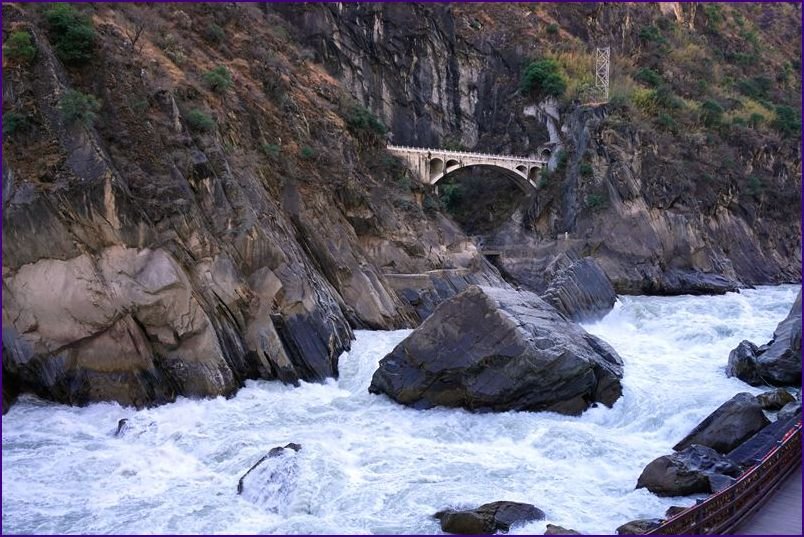
Tiger Leaping Gorge is the one hike in China that consistently exceeds its reputation. The high trail runs roughly 22 kilometres between two villages, splits naturally into two days, and puts you above a river that drops through 3,000 metres of rock. Guesthouses at the halfway point are basic and unforgettable. Do it between Lijiang and Shangri-La so the transport works for you rather than against you; the Tiger Leaping Gorge trek guide covers the trailhead logistics.
Yuanyang, five or six hours south of Kunming by road, is the other detour and a much bigger commitment. The Hani terraces are best between December and March, when the paddies are flooded and dawn turns them into sheets of reflected sky. Outside that window they are still impressive, just not the photograph you have seen. Going there costs two travel days for one sunrise; decide whether that trade is worth it to you.

One warning about the gorge: it is a working trail, not a theme park. Sections are exposed, the descent to the river is steep and loose, and summer rain makes the path genuinely dangerous in places. Walking poles and shoes with grip matter more than any camera gear you are carrying.
Altitude is the thing that actually ruins trips
Lijiang at 2,400 metres is harmless for nearly everyone. Shangri-La at 3,200 metres is not: a meaningful minority of visitors sleep badly, lose their appetite and get a headache the first night. The fix is boring and effective — spend two nights lower down first, drink more water than feels necessary, skip the welcome beer, and do not schedule the monastery and the old town on the same afternoon you arrive.
The Yulong cable car is a separate trap. It lifts you to around 4,500 metres in minutes, where the air is thin and the weather is often closed in. If the summit is in cloud from the valley floor, save your money and go another morning.
When to go
October and November are the best all-round months: dry air, clear peaks, comfortable walking. December to February is colder but bright, with snow on the plateau and the terraces at their photographic best. March and April bring blossom and strong afternoon wind. May to September is the wet season — green, dramatic, cheap, and prone to landslides on mountain roads; the gorge trail gets slippery and some high passes are unreliable.
If your dates are fixed in July or August, do not cancel. Just build in a buffer day before any flight and treat rain as a scheduling problem rather than a disaster. For a wider seasonal picture across the country, see the best time to visit China.
Public holidays matter more than weather. The first week of October and the week around Lunar New Year fill trains, guesthouses and the gorge trail itself; prices roughly double and the old towns become genuinely unpleasant. Outside those windows, Yunnan absorbs visitors unusually well for a place this popular.
What to skip, honestly
- Lijiang Old Town at midday. It is a shopping mall in stone clothing from 10 a.m. to 6 p.m. At 7 a.m. it is beautiful and empty. Go early or stay late.
- Yulong Snow Mountain on a cloudy day. Expensive tickets for a view of white fog.
- Staged minority song-and-dance shows. The real villages — around Shaxi, or the Bai settlements on the west shore of Erhai — are more interesting and free.
- Shangri-La’s fake old town. The rebuilt centre is thin. The Ganden Sumtseling monastery and the surrounding plateau are what you came for.
One exception to the scepticism: Shaxi, halfway between Dali and Lijiang, has kept its market square, its stone bridge and its Tea Horse Road feel without becoming a theme park. It is the single best place to spend a night you had not planned.
Practical notes
Yunnan is an easy province to travel independently. Trains and hotels book through the usual apps; WeChat Pay and Alipay both accept foreign cards now, but carry a few hundred yuan in cash for village buses and small guesthouses. English is thin outside Lijiang and Dali, so save Chinese place names as screenshots before you leave.
Food is a reason to come, not an afterthought. Crossing-the-bridge rice noodles are the safe entry point; wild mushroom hotpot is superb in summer but only eat it where the kitchen clearly knows what it is doing, because misidentified fungi are a real and annual hazard. Dali’s rubbery goat cheese, fried and salted, divides opinion and deserves one try.
On money: Yunnan is cheap by Chinese standards. Good guesthouses run about ¥200–350 a night, a bowl of noodles about ¥15, and a day of private car hire about ¥600 split between passengers. The loop above, done at a comfortable mid range with trains and the occasional driver, lands somewhere around ¥700–1,000 per person per day before flights.
Finally, book the popular mountain tickets — Yulong especially — a few days ahead through the official mini-program. Walk-up tickets in October are a gamble, and the queue is not the sort of thing you want to spend a clear morning on. Entry rules and visa categories shift; confirm yours on the China visa guide before booking flights.
Where to go next
If the loop above feels too gentle, the next province north is louder in every way: Sichuan’s scenic spots run from 1,000-metre tea hills to 4,700-metre passes. For a longer walking trip, the best trekking routes in China put Yunnan’s gorge in context. Travellers continuing west toward Tibet should read the Mount Kailash pilgrimage guide first, since permits and access there are a different order of difficulty. And if you want a shortlist of the country’s strangest landscapes, start with 15 natural wonders in China.
Frequently asked questions
How many days do you need in Yunnan?
Ten days covers the Kunming–Dali–Lijiang–Shangri-La loop without rushing. Seven is tight but workable if you fly straight to Lijiang. Allow four extra days for Yuanyang, or three for a proper Tiger Leaping Gorge trek.
Can you take the train from Lijiang to Shangri-La?
Yes. A rail line now runs north from Lijiang to Shangri-La, turning a long, uncomfortable bus day into a few hours of window scenery. Seats sell out around Chinese public holidays, so book early.
Is altitude sickness a problem in Shangri-La?
It can be. Shangri-La sits around 3,200 metres, and some travellers wake with headaches on the first night. Break the climb with two nights in Lijiang at 2,400 metres and treat arrival day as a rest day.
When is the best time to visit Yunnan?
October to April is dry, clear and best for trekking and the Yuanyang terraces. June to August is green and wet, with heavy afternoon showers, though the high plateau stays cool when the rest of China swelters.
Do foreigners need a permit for Yunnan?
Not for the main tourist corridor. A standard Chinese visa or visa-free entry is enough. Some counties along the Myanmar and Laos borders are restricted, so check current rules before booking remote border-area trips.
Is Yunnan good for a first trip to China?
It is one of the easiest introductions: high-speed rail, cheap guesthouses, and a well-worn backpacker trail. It does not deliver the imperial monuments of Beijing or Xi’an, so pair it with one big-city stop rather than expecting both.
Keep reading

Regions
Best Scenic Spots in Sichuan: Altitude, Buses and Honest Advice
Sichuan is not one trip The mistake almost every itinerary makes is treating Sichuan as a single destination …
Regions
Best Places in Southwest China: Where to Go With Two Weeks
Everyone planning a trip to this corner of China asks the same thing in slightly different words: I have two …