Mount Tai Sunset: Viewpoints and Getting Down in the Dark
The sunset is Mount Tai's underrated show. Sunrise gets the poetry and the crowds; sunset gets warm light on granite, a thinner line at the railings, and one problem that sunrise does not have. When the colour fades, you are still 1,545 m up with a long staircase below you and no daylight left.
This guide is about the logistics of that. Which viewpoint suits which exit, when to start, when the last cable car leaves, how long the night descent really takes, and what to carry so the walk down is tiring rather than dangerous.
| At a glance | Sunset on Mount Tai |
|---|---|
| Best months | Late September to early November for clear air; April and May as a second window. |
| Summit temperature at dusk (1,545 m) | Spring about 3 to 12°C; summer 14 to 20°C; autumn 0 to 12°C; winter -12 to -2°C. |
| Crowd level | Light on weekdays, moderate at weekends, busiest during holidays. |
| What to pack | Headtorch, warm layer, gloves, water, snacks, power bank, optional tripod. |
| Sunset by month | January about 5:20pm; March 6:20pm; May 7:15pm; July 7:25pm; September 6:15pm; November 5:05pm. All approximate. |
The viewpoints, and which one fits your exit
Jade Emperor Peak is the highest point and the obvious first choice. The western side of the summit platform looks across lower ridges with nothing tall in the way, and the view is close to 360 degrees if you turn. It is a ten to fifteen minute walk from the summit guesthouses, which matters when you are deciding whether to stay for the afterglow.
Riguan Peak sits on the eastern shoulder and faces the wrong way for the sun itself, but that is not a flaw. At dusk it gives side light and alpenglow along the ridges, with the summit buildings silhouetted against the sky. It is a quieter alternative when Jade Emperor Peak is crowded.
Nantianmen and the western edge of the summit street are the practical choice if you plan to descend by cable car, since the station is minutes away. Bixia Temple puts tiled roofs and upturned eaves in the foreground, which photographs well but slightly blocks the horizon. Scout your spot in daylight before the light starts to change.
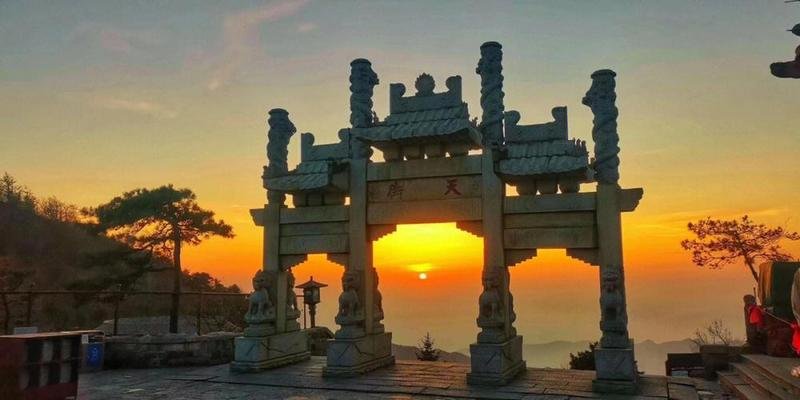
How the light behaves
The useful light starts about 40 to 60 minutes before the official sunset time. First the granite warms and the shadows lengthen, then the sky above the western horizon turns gold and the valleys go blue. If there is a cloud sea below, it picks up pink and orange for ten or fifteen minutes, which is often better than the sun itself.
Stay for the afterglow. Twenty to thirty minutes after the sun disappears, the sky can turn deep violet and the first stars appear over the eastern ridge. Many people leave too early and miss the best colour of the evening. In winter the whole sequence is compressed and the cold arrives quickly; in summer it stretches out but convective cloud often closes the horizon.
Timing the climb
A full walk from the Red Gate takes four to five hours with stops, so an early lunchtime start is about right for a spring or autumn sunset. From Zhongtianmen, two to two and a half hours is enough. If you take the cable car, be at the top by mid-afternoon: the summit is worth an hour of wandering before you pick a spot.
Arrive at your viewpoint 45 to 60 minutes early. On a holiday the front row at Jade Emperor Peak can be three deep by an hour before sunset, and the good corners near the railing go first. Bring something to sit on, because the stone is cold and you will be standing around in wind.
Getting off the mountain in the dark
The last cable car down leaves before dusk, and in winter it can stop mid-afternoon. Check the board at the station on the morning of your visit and do not assume a sunset ride. The ticket bus between Zhongtianmen and Tianwai Village generally stops when the cableway does, so plan your exit as a walk unless staff tell you otherwise.
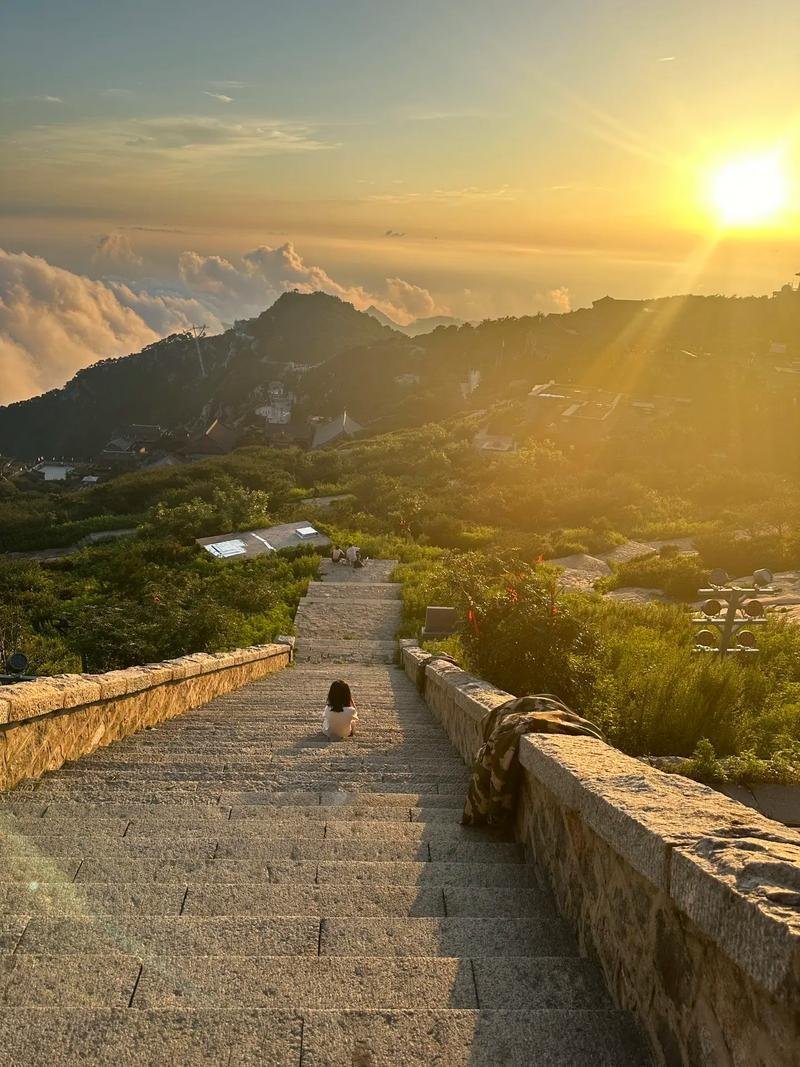
The descent is straightforward but long. Summit to Zhongtianmen is about two to two and a half hours, and Zhongtianmen to Hongmen another two to two and a half. The Eighteen Bends is the section to respect: steep, uneven and unlit in stretches. A headtorch with fresh batteries, a spare in your bag and shoes with grip are the minimum. Walk with someone if you can, and tell your hotel what time you expect to be down.
Sunset versus sunrise
Sunrise is the famous event, with several hundred to a couple of thousand people on the summit in peak season. Sunset typically draws a few dozen to a few hundred, and the mood is quieter: fewer phone screens, more people simply watching. The light is also warmer on the rock, because it comes in low from the west rather than raking up from the eastern horizon.
The catch is transport. Sunrise rewards people who sleep on the mountain, because cable cars do not run before dawn. Sunset rewards people who plan their descent, because the same is true in reverse. The elegant solution is to stay one night and do both, accepting a short, cold sleep between them.
Photography notes
Expose for the sky and let the foreground go dark; the silhouettes of temple roofs and pine branches are the point. A small tripod helps after the sun has gone, but keep it low and close to your feet so it does not become a hazard in the crowd. A short telephoto compresses the layers of ridge and cloud better than a wide lens, which tends to make the landscape look flat.
Wind is the enemy of sharp images on the summit. Shield the camera with your body, and accept a slightly higher ISO rather than a long exposure that smears the trees. Wipe your lens after every few shots in cold weather, when breath and mist condense quickly.
Where to go next
If dawn is the real goal, read the guide to sunrise at Riguan Peak and the wider piece on Mount Tai sunrises. For the season with the clearest evening air, see autumn on Mount Tai. Routes, tickets and buses are covered in the Mount Tai travel guide, and the night-walking kit is in what to pack for mountain hiking in China.
Frequently asked questions
Where is the best sunset viewpoint on Mount Tai?
Jade Emperor Peak and the western edge of the summit street give the widest view. Nantianmen is convenient if you plan to take the cable car down, and Bixia Temple puts old roofs in the foreground. Riguan Peak faces east, so it suits side light rather than the sun itself.
What time should I start climbing for sunset?
Allow four to five hours on foot from Hongmen, or two to two and a half hours from Zhongtianmen. If you use the cable car, be at the top by mid-afternoon. Whatever the route, reach your viewpoint 45 to 60 minutes before sunset.
Can I take the cable car down after sunset?
Usually not. The last descent runs before dusk and earlier in winter, so sunset often happens after the cableway has stopped. Check the board at the station that morning and assume you will walk down unless staff confirm otherwise.
How difficult is the night descent?
It is tiring rather than technical, but sections of the Eighteen Bends are unlit and the steps are uneven. Allow two to two and a half hours to Zhongtianmen and four to four and a half hours to Hongmen. A headtorch and a spare battery are essential.
Is sunset less crowded than sunrise?
Yes, usually a fraction of the dawn crowd. On ordinary weekdays a few dozen to a few hundred people spread across the summit. Holidays are busier, but the railings rarely fill the way they do at first light.
What should I carry for a sunset visit?
A warm layer and windproof shell, gloves, water, snacks, a headtorch with fresh batteries and a power bank. If you want long exposures, bring a small tripod, but keep it low so it does not block the people behind you.
Keep reading
Mountains
Tianchi Lake at Changbai Mountain: When the Crater Lake Appears
Tianchi — Heaven Lake — is the reason people fly to Changbai Mountain: a crater lake at about 2,190 m inside a …
Mountains
Hidden Mountains in China: 10 Peaks That Western Itineraries Skip
The mountains foreign visitors skip are not secret. Chinese hikers know them, photograph them and queue for …
Mountains
Mount Tai: Choosing a Route, Catching Sunrise and Sleeping on Top
Mount Tai rises 1,545 metres above the Shandong plain, a modest figure that has never been the point. What …