Mount Song Travel Guide: Shaolin Temple and the Central Peak
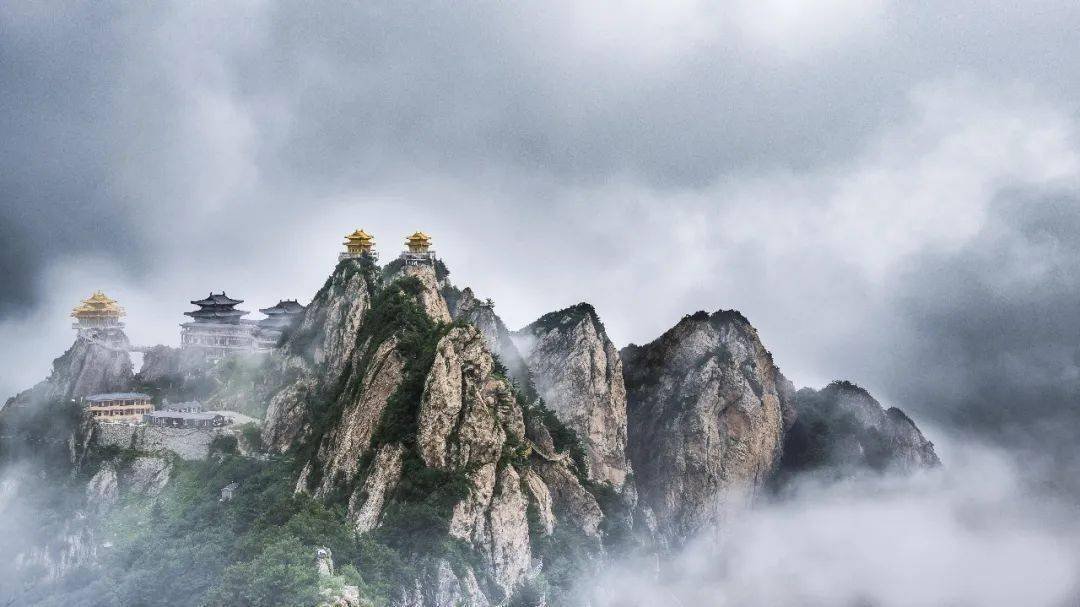
Mount Song (Songshan) is the middle one of China's five great mountains, and by far the least dramatic. There is no granite pillar forest, no reliable sea of clouds, and the highest summit, Junji Peak, barely clears 1,500 metres. What Songshan has instead is concentration. Within about twenty kilometres of the small city of Dengfeng, Buddhism, Daoism and Confucianism each built a headquarters, and emperors spent three thousand years coming here to explain themselves to heaven.
UNESCO recognised that density in 2010, inscribing the historic monuments of Dengfeng as “The Centre of Heaven and Earth”. If you have two or three days in Henan and want to understand how the three religions actually shared a landscape — the real version, with incense, coach parties and monks checking their phones — Mount Song is the most efficient place in China to see it. This guide covers the journey from Zhengzhou and Luoyang, which sites earn their ticket, what things cost, and the crowding that ruins Shaolin for anyone who arrives at nine in the morning.
Mount Song at a glance, and getting there
| Location | Dengfeng, Zhengzhou, Henan |
|---|---|
| Nearest rail | Zhengzhou East or Luoyang Longmen, then 1.5 to 2 hours by road |
| Admission | About ¥80 at Shaolin and about ¥80 on the Taishi side; smaller sites charge separately |
| Cable car | Two, one above Shaolin and one on the Taishi side, about ¥70 to ¥100 one way |
| Days needed | 2 for the whole mountain, 1 for Shaolin alone |
| Best months | April to June and September to November |
Dengfeng has no high-speed station, so the final leg is always by road. The two useful railheads are Zhengzhou East, on the main north–south and east–west lines, and Luoyang Longmen, convenient from Xi'an. From either, a bus or taxi takes roughly 1.5 to 2 hours. Buses from Zhengzhou central bus station cost about ¥30; a taxi or Didi is around ¥300 and saves an hour of waiting. Book trains with your passport on 12306, the official app described in our high-speed rail guide.
Once in town, everything is close: Shaolin is about 13 kilometres east, Songyang Academy sits on the northern edge of Dengfeng, and the Zhongyue Temple and Gaocheng observatory are within half an hour. Local taxis are cheap, but there is no metro; ask your hotel to call a car or fix a return time with the driver who takes you out.
Why this mountain, and not one of the others
China's five great mountains each had a job. The eastern one, Tai, was where emperors reported to heaven; the northern one guarded the frontier. Songshan held the centre, and in the cosmology of the Zhou dynasty the Central Plains were the middle of the world, so the mountain at their centre was the point from which the ruler spoke to the sky.
The records are the attraction. At the foot of the mountain stand three stone que gate towers — Taishi, Shaoshi and Qimu — built in the Eastern Han dynasty around the second century AD and now the oldest surviving ceremonial gateways of their kind in China. Nearby, the Gaocheng observatory was built in the thirteenth century under the astronomer Guo Shoujing, who used a long stone gnomon to measure the sun's shadow and recalibrate the calendar. None of this photographs as well as a granite spire. All of it is more interesting than one.
Shaolin Temple: what you are actually visiting
The temple was founded in 495 AD and became famous when the Indian monk Bodhidharma arrived in the sixth century and taught a form of meditation later known as Chan, and in Japan as Zen. The martial arts connection came afterwards. The story that Bodhidharma invented kung fu is tradition rather than documented history, but the monastery has trained fighters for centuries and the industry built around that reputation is now enormous. The Wudang Mountains built the same industry around Daoist internal arts.
The approach is a commercial strip: kung fu schools with banners, shops, loudspeakers, electric carts. Push through it, because behind the gate the temple is still a working monastery, with incense, chanting and monks who will ask you not to photograph them at prayer. Allow two hours for the halls and the Pagoda Forest, the best thing on the mountain: more than 240 brick and stone pagodas from the Tang to the Qing, tombs for abbots, each a different shape, standing in a shaded grove.
A kung fu demonstration runs several times a day in a hall near the entrance, half an hour of jumps and staff forms. It is staged for tourists and still worth seeing, because the performers are students from the schools you just walked past. Above the temple, a staircase climbs for about an hour to Damo Cave, where Bodhidharma is said to have sat facing a wall for nine years; the cave is small, the view is the reward. Across the valley, the Sanhuangzhai cable car opens a steeper, quieter side with real hiking.
The other two religions, ten minutes away
Songyang Academy was one of the four great academies of the Song dynasty, where Neo-Confucian scholars rebuilt Chinese philosophy around the idea that anyone could become a sage through study. The courtyards are calm and green, the lecture hall still stands, and two ancient cypresses outside are claimed to be more than two thousand years old. An hour is enough, and it explains why the mountain mattered to scholars as well as monks.
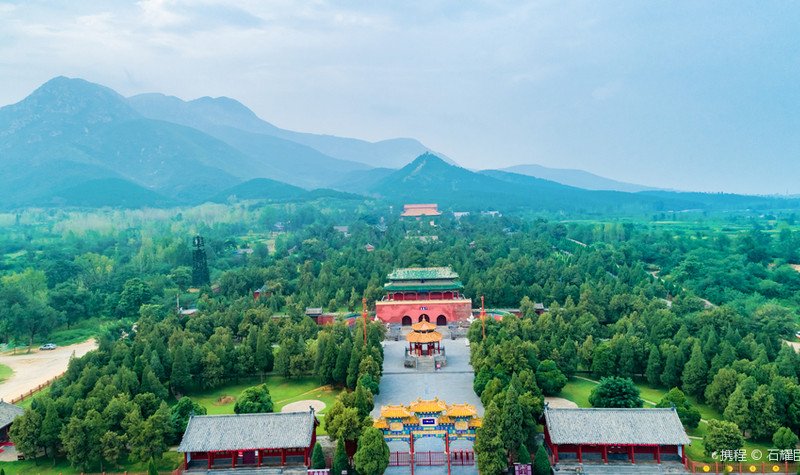
Zhongyue Temple is the largest Daoist complex in central China, founded in the fourth century with halls mostly rebuilt in the Ming and Qing. It serves the deity of the Central Peak, and unlike Shaolin it is rarely crowded. The scale is imperial: long axis, heavy gates, old trees, and almost no English signage, which keeps the coach parties away.
Gaocheng, the Yuan observatory, is a brick tower with a stone gnomon running north, in a field outside town. Twenty minutes is enough. Combine it with the three Han que towers on the same afternoon and you have seen the oldest things at Songshan in under three hours.
One day, two days, or a slow three
One day: Shaolin at opening, temple and Pagoda Forest and the show by noon, then Songyang Academy and Zhongyue Temple in the afternoon. It works, but you will spend the day in other people's photographs.
Two days, which is what I would do: day one at Shaolin, adding either Damo Cave on foot or the Sanhuangzhai cable car. Day two on the Taishi side: Songyang Academy in the morning, Zhongyue Temple and Gaocheng after lunch, then the climb up Junji Peak from behind the academy — three to four hours return on stone steps through pine forest, with water stalls most of the way.
Three days: add Fawang Temple and the Qimu Que, which almost no foreign visitor reaches, and a morning kung fu class near Shaolin; beginners are welcome.
Tickets, cable cars and costs
- Shaolin scenic area: about ¥80, covering the temple, the Pagoda Forest and the shuttle from the car park.
- Taishi side: about ¥80, covering Songyang Academy and the Junji Peak trail area.
- Zhongyue Temple and Gaocheng: small separate fees, usually under ¥30 each.
- Cable cars: about ¥70 to ¥100 one way at Shaolin and on the Taishi side.
Tickets are sold at the gates and through WeChat mini-programs, where foreign cards often fail. Link a card to Alipay before you travel, or carry cash.
When to go, and how bad the crowds get
April to June and September to November are the good months: mild, green, and clear enough to see the ridge from the valley. July and August are hot, humid and busy. Winter is quiet and often grey, but snow on the temple roofs is the most photogenic thing that happens here.
The crowding has a rhythm you can work around. Coach groups hit Shaolin between 9 and 11 am and are gone by two. Be at the gate at eight, walk straight to the Pagoda Forest while it is empty, and save the temple halls for lunchtime. Avoid National Day week, May Day and Lunar New Year entirely — the road to the car park becomes a queue of buses. A normal weekend is busy; a Tuesday in November is not. Songshan is a cultural landscape, not a wilderness; for a hard day out, head for Sanhuangzhai or Junji Peak.
Where to go next
If you want a harder mountain after this one, Mount Hua delivers the vertigo that Songshan does not, while Mount Wutai shows what a working Buddhist pilgrimage mountain looks like. Both are reachable by rail from Zhengzhou or Luoyang.
For a wider shortlist, the ten most beautiful mountains in China puts Songshan in context with the peaks that beat it on scenery. Anyone building a longer itinerary should check the best time to visit China before locking dates around a public holiday.
Frequently asked questions
Where is Mount Song and how do I get there?
Mount Song sits beside Dengfeng, a small city about 70 km southwest of Zhengzhou in Henan. Dengfeng has no high-speed station, so you take a train to Zhengzhou East or Luoyang Longmen and then a bus or taxi for 1.5 to 2 hours. A direct car from Zhengzhou airport takes about 90 minutes.
Is Shaolin Temple too touristy to enjoy?
The approach road is a commercial strip of kung fu schools and souvenir stalls, and coach groups arrive between 9 and 11 am. The temple itself is still a working monastery with chanting and incense, and the Pagoda Forest behind it is genuinely beautiful. Arrive at opening and it is a different place.
How many days do I need for Mount Song?
One day covers Shaolin Temple and the Pagoda Forest. Two days lets you add Songyang Academy, Zhongyue Temple and the observatory on one side and a hike up Junji Peak or the Sanhuangzhai valley on the other. Three days is comfortable if you want a kung fu class.
Can I climb the highest peak, Junji Peak?
Yes. The trail starts on the Taishi side near Songyang Academy and takes around three to four hours return on stone steps through pine forest. It is a walk rather than a scramble, with shops selling water on the way. The summit is only about 1,500 metres, so altitude is not an issue.
What is the difference between Songshan and Shaolin?
Songshan is the whole mountain range and its cultural landscape, one of the five great sacred peaks of China. Shaolin is one temple within it, famous as the birthplace of Chan Buddhism and of Chinese martial arts. The mountain also holds Daoist and Confucian sites that most Shaolin day trippers never see.
When is the best time to visit Mount Song?
April to June and September to November, when temperatures are mild and the forests are either fresh or turning. Summer is humid and crowded, and winter is quiet but grey, though snow on the temple roofs is worth the cold. Avoid National Day week, May Day and Lunar New Year.
Keep reading
Sacred Mountains
Mount Kailash Pilgrimage Guide: Permits, the Kora and Altitude
Mount Kailash is not a summit you stand on. It is a 6,638-metre cone of black rock and permanent snow in the …
Sacred Mountains
Mount Wutai Pilgrimage Guide: How to Get There, the Temples and the Five Terraces
Mount Wutai is the highest and coldest of China’s four sacred Buddhist mountains, and the least visited by …
Sacred Mountains
Mount Emei Travel Guide: Trains from Chengdu, Hiking Routes and Real Costs
Mount Emei is the highest of China’s four sacred Buddhist mountains and one of the easiest big mountains in …