Moganshan Travel Guide: Bamboo Trails, Old Villas and a Cool Weekend
Moganshan is a 719-metre ridge of bamboo in northern Zhejiang, close enough to Hangzhou for a weekend and close enough to Shanghai to fill every summer Saturday. It has been the region's escape hatch for over a century: first for missionaries and Shanghai merchants who built villas here in the 1920s, now for families, cyclists and hotel guests chasing air five degrees cooler than the city.
It is not a national park and it is not wilderness. The ridge is a village, a ticketed scenic area and a web of old stone paths, and most first-time visitors spend a morning working out which of those they are standing in. This guide sorts it out: the walks that justify the trip, how to arrive by train, what it costs, where to sleep and when to avoid the crowd.
Moganshan at a glance
| Location | Deqing County, Huzhou, Zhejiang |
|---|---|
| Distance | About 60 km north of Hangzhou, about 240 km from Shanghai |
| Highest point | Tashan, 719 m |
| Character | Bamboo forest, 1920s villas, village resorts |
| Scenic area entry | About ¥80 in peak season |
| Best months | March–May and October–November |
| Suggested stay | Two nights |
| Getting around | Shuttle buses inside the scenic area; stone paths between villages |
What Moganshan actually is
Three names get used interchangeably and should not be. The scenic area is the ticketed ridge, containing Jianchi (Sword Pond), Luhuadang, the stone church and most of the old villas. Yinshan Street is the village on top, where hotels, restaurants and the main shuttle stop are. Wukang town is the ordinary county town at the foot: useful for buses and cheap rooms, but not the mountain.
Private cars are restricted inside the scenic area at busy times. You leave the car at a transfer centre and ride the shuttle up, which is the single most useful thing to know before driving there. Inside, the ridge is small enough to walk between villages, though the paths are steep and occasionally unsigned. If you want a village that still feels genuinely remote, Zhagana in Gansu is the opposite of this place.
Four walks worth the trip
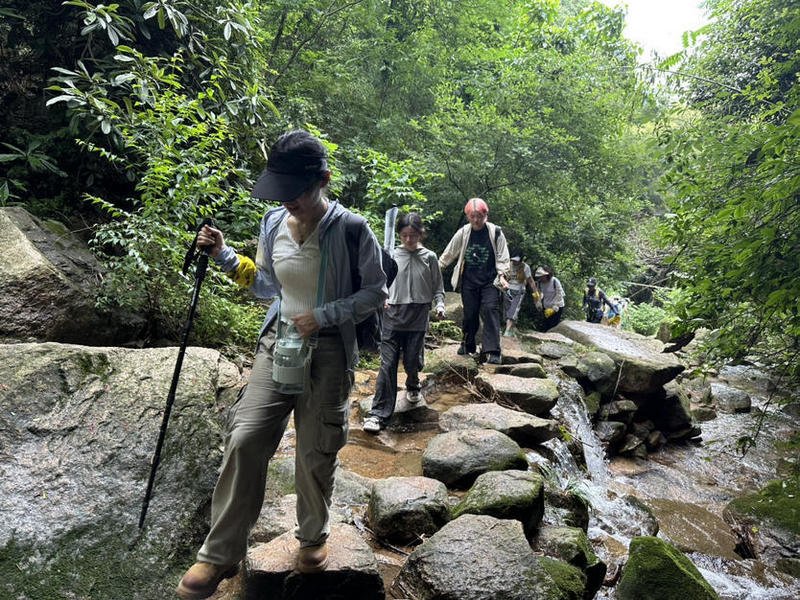
Hiking at Moganshan is short, shaded and vertical. None of these is a trek, and together they make a good two days. If you want flatter ground, start with these easy day hikes instead.
Jianchi loop from Yinshan Street
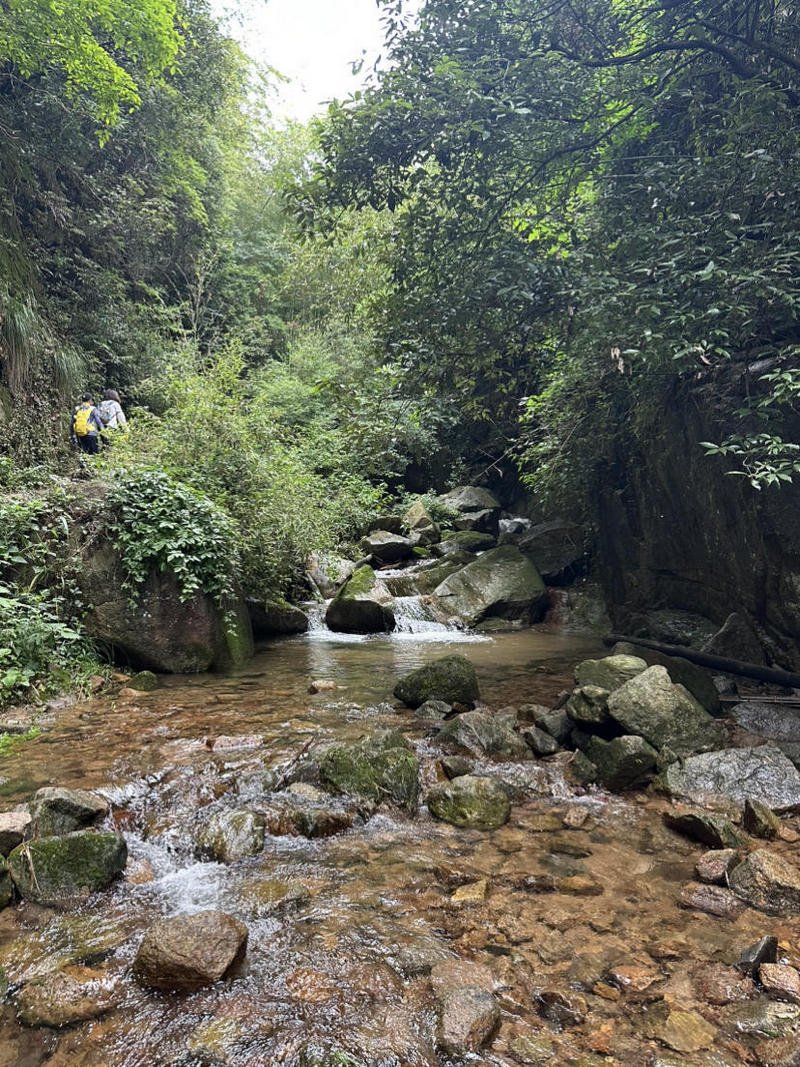
The classic, and the one to do on your first afternoon. Two to three hours of stone steps drop through bamboo to Sword Pond, where two swordsmiths are said to have forged their blades, then past a small waterfall and back through the villas. There is one steep section and a fair amount of paved road, but the shade holds even at midday.
The Chiang Kai-shek trail
This is the old path from Mogaowu up to Jianchi, a steady 90 minutes to two hours of climbing rather than anything technical. It is where the ridge opens up and the bamboo gives way to views over the valley. The climb is continuous, so pace yourself; 719 metres is not much, but you gain most of it in one go.
Dakeng loop
Half a day, three to four hours, through bamboo and villages that see few visitors, with one long pull up to a ridge viewpoint. The walking is quieter and less manicured than Jianchi, with a few unsigned junctions. Bring a Chinese map app. For more walking at this scale elsewhere in the region, see mountains in East China.
Wukang town to the ridge on foot
The old road up from the valley floor takes about three hours and is tarmac in places. Choose it for distance and a sense of arrival rather than for scenery; most people take the shuttle and save their legs for the ridge.
Getting there
By train. Deqing station on the Hangzhou–Nanjing high-speed line is the nearest, with frequent services from Hangzhou and direct trains from Shanghai. From the station, a taxi to the scenic area transfer centre takes about 40 minutes and costs roughly ¥120–160. Local buses run to Wukang, from where the shuttle climbs to Yinshan Street.
By coach. Direct long-distance buses from Shanghai to Wukang take three to four hours and cost about ¥50. From Wukang, a minibus or taxi covers the last climb.
By car. Two and a half to three hours from central Shanghai. Parking is at the transfer centre, and the shuttle ticket is usually separate from the entry ticket, so budget for both.
What it costs
| Item | Approximate price |
|---|---|
| Scenic area entry, peak season | About ¥80 |
| Shuttle inside the area | About ¥20 per ride, or included in some passes |
| Villa or garden entry | About ¥30–60 where charged |
| Taxi from Deqing station | About ¥120–160 |
| Mid-range room, weeknight | About ¥450–900 |
| Dinner for two | About ¥150–250 |
| Bamboo rice | About ¥40–60 |
These are 2026 estimates and move with season and weekend demand; confirm at the transfer centre or with your hotel. Weekend rates can double, and the same room in August costs far more than in December.
Where to sleep
Yinshan Street is the convenient choice: walk to the pond, the church and the shuttle, with restaurants that stay open late. Xiantan and Miaotian villages are quieter, with design hotels and homestays set in bamboo, and need a car or shuttle to reach the sights. A handful of the historic villas rent rooms and are worth it for the architecture alone. Wukang town is the budget option, 40 minutes below the ridge.
Book weekends at least two weeks ahead, and July or August a month ahead. Many small places close on weekdays in winter.
When to go
| Season | What you get | Caveats |
|---|---|---|
| March–May | Tea harvest, fresh green, mild air | Frequent rain, slippery steps |
| June–August | The coolest nights in the region | Shanghai weekend crowds, peak prices |
| September–November | Clear air, bamboo seed heads, quiet weekdays | First week of October is packed |
| December–February | Occasional snow, near-empty trails | Cold rooms, some businesses shut |
Summer is the reason the mountain exists and also the reason a Saturday in July is a bad idea. Go midweek, or accept that the shuttle queue is part of the experience. Autumn is the better all-round season: the light is clearer, the trails are dry and the villages are calm from Monday to Thursday.
Eating and tea
The local cooking is mountain food with little fuss: bamboo rice steamed inside a fresh bamboo tube, chicken stewed with bamboo shoots, dried bamboo shoots, fern, and earthen-pot tofu. Qingtuan, the green rice cake made with mugwort, is sold on Yinshan Street for a few yuan. Moganshan huangya, a local green tea, is picked in spring and sold in shops along the village road; expect about ¥300–800 per 500 g for everyday grades, and taste before buying anything expensive.
Small things that matter
- Reserve the shuttle, not just the room. At busy times the transfer centre runs on tickets, not on queueing.
- Carry cash and WeChat Pay. Small tea stalls and village restaurants may not take foreign cards.
- Wear shoes with grip. The stone is polished by a century of feet and slippery after rain; a light shell matters as much as footwear, as this mountain packing list explains.
- Do not expect waymarking. Paths branch without signs; a Chinese map app is more reliable than Google.
- Keep your plans small. Moganshan rewards a slow afternoon on a veranda more than a checklist of viewpoints.
Where to go next
If you like the village-and-tea version of a mountain, Shaxi in Yunnan is the same idea with better food and fewer tour buses. For mountains that are actually wild, see hidden mountains in China and the best hiking trails in China. If you are building a wider nature itinerary, start with the best national parks.
Frequently asked questions
How do you get to Moganshan without a car?
Take a high-speed train to Deqing station, then a taxi of about ¥120 to ¥160 for the 40-minute run to the transfer centre, or a local bus to Wukang and the shuttle up. Direct coaches from Shanghai to Wukang are the cheapest option and take about three hours.
Is Moganshan good for hiking?
Yes, if you accept short walks rather than wilderness. The Jianchi loop takes 2 to 3 hours, the Chiang Kai-shek trail is a steady 90-minute climb, and the Dakeng loop fills half a day. Most paths are stone-paved and link the villages.
How much is entry to Moganshan?
About ¥80 in peak season and less in winter, with shuttle rides inside the area costing extra. Some villas and gardens charge their own ¥30 to ¥60. Prices change, so check at the transfer centre rather than trusting a booking site.
When is Moganshan quiet?
Weekdays in April, May, October and November. July and August are the coolest months and also the busiest, with Shanghai weekenders pushing room rates up sharply. Avoid the first week of October and the Lunar New Year holiday.
Can you visit Moganshan as a day trip from Shanghai?
It is possible but rushed: three hours each way plus transport inside the area leaves about four hours on the ridge. Two nights is the right amount, and one night is the minimum for a walk and a proper meal.
What is Moganshan known for?
Bamboo forest, cool summer air and around 250 villas built between the late Qing and the 1920s, when Shanghai families used the ridge as a summer retreat. Tashan, the main peak, is 719 metres. It is a village resort, not a national park.
Keep reading
Mountain Villages
Zhagana, Gansu: Tibetan Stone Village and Hiking Guide
Zhagana looks like a place that was built to be defended. Four grey limestone walls rise almost vertically …
Mountain Villages
Shaxi, Yunnan: Tea Horse Road Town and Shibao Mountain
The first thing to notice in Shaxi is the square: a stone-paved triangle with a Ming-era theatre stage on one …