Kanas Lake: Hemu, Baihaba and the Autumn Window in Xinjiang
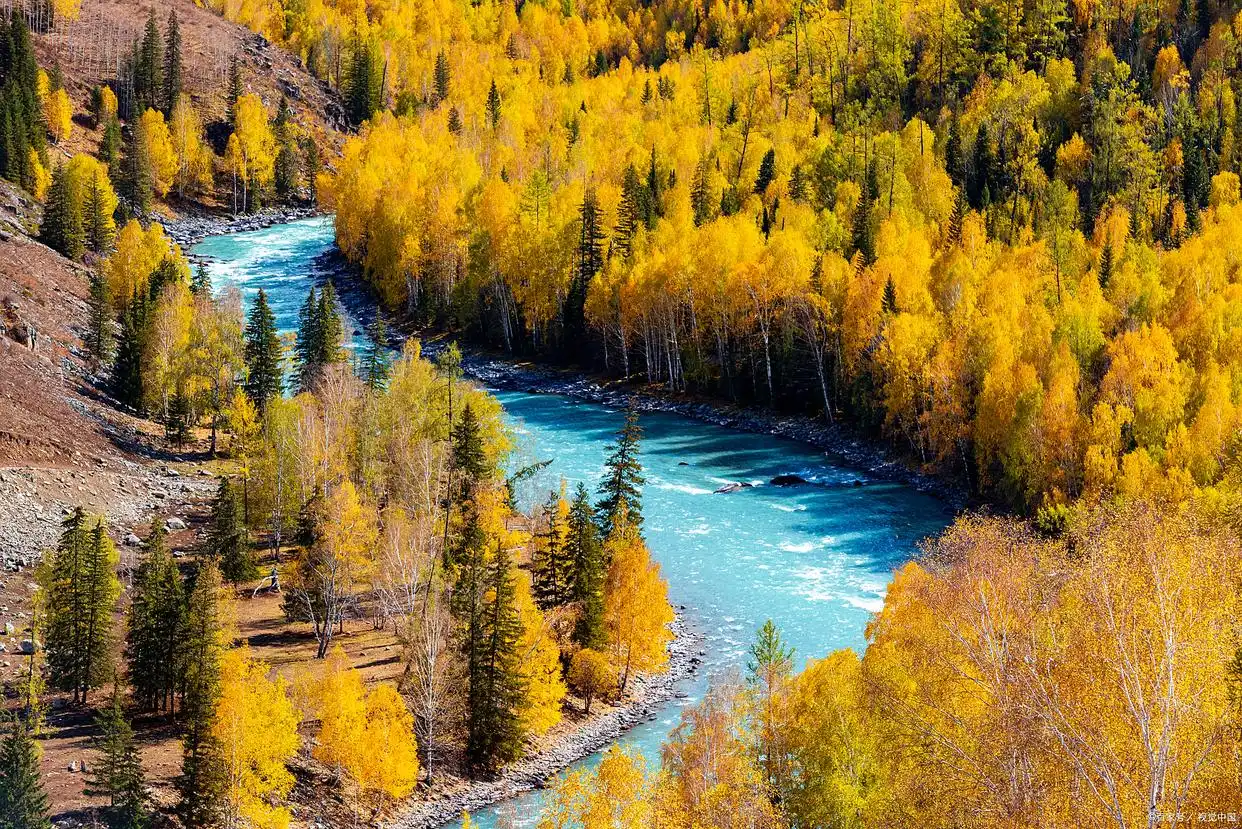
Kanas is a long, cold lake at about 1,370 m in the far north of Xinjiang, roughly 24 km from end to end and about 188 m deep, with larch and birch forest running down to the water and the borders of Kazakhstan, Russia and Mongolia all within reach of the reserve. The water changes colour with the light — emerald in sun, slate under cloud — and the whole basin looks more like Siberia or northern Scandinavia than the China most visitors picture.
It is also a park with a bus system, a very long approach and three villages that most people rush. The trip works when you treat Kanas, Hemu and Baihaba as separate places and give them four or five days. This guide covers which village to sleep in, when the larches turn, how the shuttles work and which border rules you should check rather than assume.
Kanas at a glance
| Location | Burqin County, Altay Prefecture, northern Xinjiang, close to the Kazakh, Russian and Mongolian borders |
|---|---|
| Nearest airport | Kanas Airport near Burqin, or Altay Airport for better connections; both need a road transfer of several hours |
| Best months | 20 September to 5 October for colour; June to August for green forest and long days |
| Days needed | Four or five, spread across the lake, Hemu and Baihaba |
| Tickets and rules | About ¥160 entry plus about ¥100 shuttle in peak season; no private cars past Jiadengyu; border-area rules for Hemu and Baihaba must be checked |
The lake, bay by bay
The Kanas River runs north from Jiadengyu through three named bends before it reaches the lake, and the park shuttle stops at each. Wolong Bay is the first, a wide pool with a forested island; Moon Bay is the postcard, an S-curve of green water with a boardwalk down to the bank; Fairy Bay, closest to the village, is where mist sits on the water at dawn and where photographers queue before eight.
The lake itself is best seen from the Fish Watching Pavilion, a viewpoint on the hill above the eastern shore reached by roughly a thousand steps, 20 to 30 minutes of climbing for anyone reasonably fit. From the top you get the full length of the water, the forest on both sides and, on a clear morning, snow behind. Boat trips run on the lake and cost extra; they are pleasant rather than essential, and the viewpoint is the better use of an hour.
Local legend has a large creature in the lake. The plausible explanation is the Siberian taimen, a salmonid that can reach enormous sizes, and the stories have survived because the water is deep and rarely clear. Treat it as folklore with a biological footnote, not a reason to book. For a comparison of Chinese lake scenery that is easier to reach, see Jiuzhaigou Valley; for the wider shortlist, 15 natural wonders in China puts Kanas alongside them.
Hemu, Baihaba and Kanas village
Kanas village sits at the south end of the lake, a cluster of wooden houses and guesthouses inside the park boundary. It is the convenient base for the bays and the pavilion, and the most developed of the three. Sleep here if your priority is the lake and an early start.
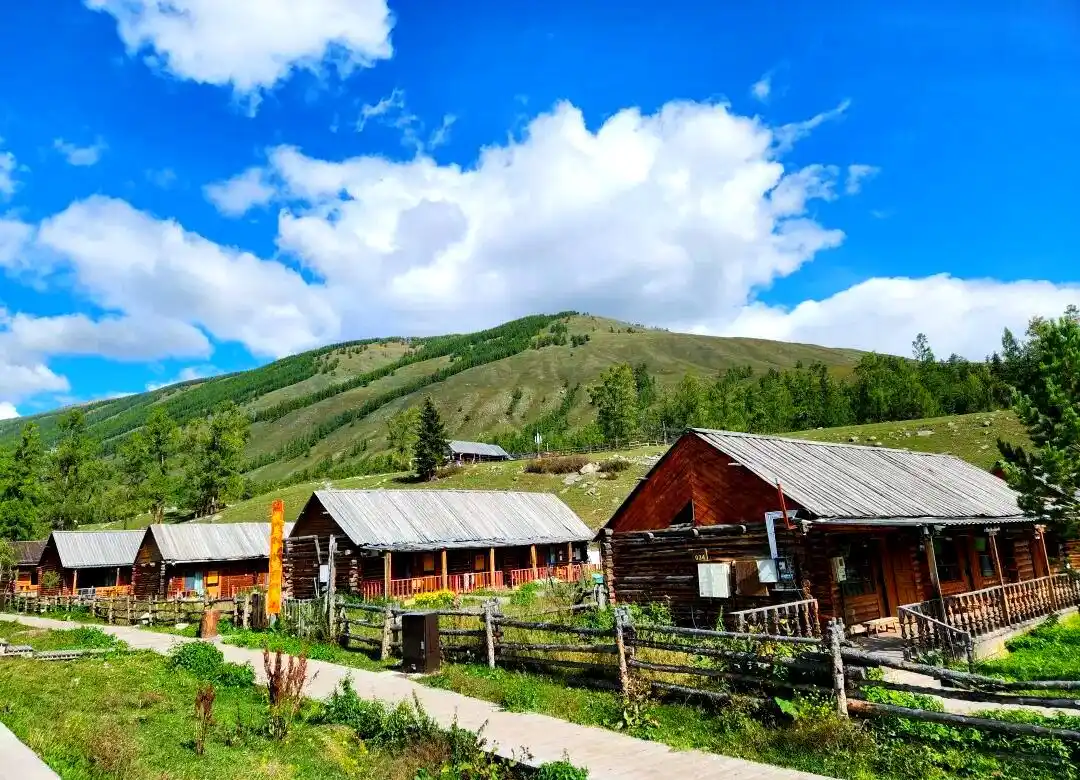
Hemu is the one people remember. A Tuva and Kazakh village of log houses along a river, with a low ridge opposite that gives the classic sunrise view: mist in the valley, smoke from the chimneys, larches behind. It is an hour or two by road from the Kanas gate depending on the checkpoint, and it deserves two nights rather than one. Guesthouses are family-run, rooms are simple, and cash still matters because signal and card machines come and go.
Baihaba is smaller, quieter and further northwest, close to the Kazakh border, with a border post on the road. It feels like the end of the country because it nearly is. Access for foreign visitors is the variable: the village sits in a border zone, arrangements change, and some periods require a guide or a permit arranged in advance. Check current rules before you build an itinerary around it, and carry your passport.
When the larches turn
Autumn here is short and precise. The larch and birch usually peak between about 20 September and 5 October, and a hard wind can strip the best slopes within days. The first week of October is a national holiday, when domestic visitors arrive in numbers that make the shuttles and viewpoints uncomfortable; the second half of September is calmer and often better light.
June to August is the green season: long days, wildflowers, comfortable daytime temperatures and mosquitoes in the wetter spots. Rain is common in July, and cloud can hide the ridges for a whole morning. Winter, roughly December to February, is a genuine snow landscape with few visitors and temperatures from about minus 20 to minus 30 Celsius; some facilities close and transport is limited, so it suits travellers who have checked what is actually running.
Late October and November are the awkward weeks: colour gone, snow not yet settled, some services shut. May is similar in reverse, with mud and late snow on the trails. If you have a choice, take late September and accept the cold mornings.
Getting in: flights, road and park shuttles
By air. Most trips start with a flight to Urumqi, then a domestic flight to Altay or Kanas Airport near Burqin. From either airport it is a drive of several hours to the Jiadengyu gate, and the last stretch is slow whatever the map says.
By rail and road. Trains reach Altay from Urumqi, and long-distance buses run to Burqin, but neither puts you at the gate. From Burqin the road to Jiadengyu takes about three hours, and the drive to Hemu branches off earlier. The China high-speed rail guide explains booking with a passport, though this is one part of China where flying saves real time.
Inside the park. Private cars stop at Jiadengyu. Shuttles run from the gate to Kanas village and the lake, with stops at the three bays, and a separate shuttle serves the Fish Watching Pavilion. Schedules tighten in low season, and the last bus back matters more than the first one out.
Tickets, packages and what a package is worth
Peak-season entry is about ¥160 with about ¥100 for the internal shuttle; boats, the pavilion shuttle and any second-day arrangements are extra, and prices change. Tickets are checked at the gate and again on the shuttles, so keep the paper or the QR code accessible.
For a first visit, a four-day package with a driver is genuinely useful here. The distances between Urumqi, Burqin, Hemu, Baihaba and the lake are long, signage is limited, and a driver who knows the checkpoints saves a day of guessing. Independent travel works if you book guesthouses directly, accept shared vans between towns, and give yourself an extra day as buffer.
What a package will not fix is the crowd at Moon Bay at ten in the morning. Whatever you book, arrange the days so that the lake and the pavilion come first thing, and leave the villages for the afternoon. Cheap tours that promise all three villages in two days spend most of their time in a vehicle.
Border areas and practical rules
Kanas is a normal ticketed park, but Hemu and Baihaba are inside a border zone, and this is the part of the trip most likely to change. Rules for foreign visitors can tighten or loosen with little notice, so check current requirements before booking and again before you travel. Carry your passport at every checkpoint, expect vehicle inspections, and do not photograph border posts, guard posts or military vehicles.
Drones are a bad idea anywhere near the border and are restricted in the reserve. Mobile signal is patchy in the villages, so download offline maps and keep cash for guesthouses and meals. Nights are cold even in August, and the temperature swing between a sunny afternoon on the lake and a morning in Hemu is larger than most people pack for. If you still need to sort out entry documents, start with the China visa guide for tourists.
Where to go next
Kanas and Tianchi at Changbai Mountain are China's two great northern volcanic and alpine water destinations, and comparing them is useful when planning a summer trip. The best national parks in China covers the ticketing and shuttle systems elsewhere, while the most beautiful mountains in China and the best hiking trails in China will help you decide where the walking is actually worth the flight.
Frequently asked questions
How many days do you need for Kanas, Hemu and Baihaba?
Four or five. Two nights around the lake for the bays and the viewpoint, one or two in Hemu for the morning mist, and a night in Baihaba if the border rules allow it. Three days means rushing the drives.
When is the best time to see the autumn colours at Kanas?
Roughly 20 September to 5 October, when the larch and birch turn gold. The first week of October is a national holiday and the park is packed, so the second half of September is the better bet.
Do foreign visitors need a permit for Kanas or Baihaba?
Kanas itself is a normal ticketed park, but Hemu and Baihaba sit in a border area. Access rules for foreign visitors can change, so check current requirements with a local operator and carry your passport at every checkpoint.
Can you drive your own car into Kanas?
No. Private vehicles stop at the Jiadengyu gate and you continue by park shuttle. Some winter and low-season arrangements differ, and tour vehicles sometimes have separate access, so confirm when you book rather than assuming.
Is Kanas worth it compared with Jiuzhaigou?
They are different trips. Jiuzhaigou is denser, easier and busier, with boardwalks between lakes. Kanas is a long, forested lake with villages and a border, and it rewards slow travel. Kanas is also much farther from anywhere.
How cold does it get at Kanas?
Summer days are pleasant but nights drop close to freezing. Late September mornings can be below zero, and winter runs from about minus 20 to minus 30 Celsius. Bring a real jacket whatever the month.
Keep reading
Nature & Parks
National Parks in China: What the Designations Actually Mean
Two systems, and why the confusion matters Search for "national parks in China" and you will get a list that …
Nature & Parks
15 Natural Wonders in China: Karst, Desert, Lakes
The honest answer to "what should I see in China" is not a list of cities. It is a set of landscapes that do …
Nature & Parks
Daocheng Yading: Three Sacred Peaks and the Milk Lake Hike
Daocheng Yading is a high valley in western Sichuan where three peaks of about 5,950 to 6,030 m stand over …