Hidden Mountains in China: 10 Peaks That Western Itineraries Skip
The mountains foreign visitors skip are not secret. Chinese hikers know them, photograph them and queue for their cable cars; what they lack is any presence in English-language travel planning. There is no package tour, no TripAdvisor consensus, no direct train advertised to foreigners, and often no English sign at the trailhead. That gap is the opportunity: a mountain of Huangshan quality with a tenth of the crowd, at the cost of an extra bus ride and some patience.
This list covers ten. Each entry explains why it gets skipped — the honest reason, not a marketing one — and what you actually gain by going. Two of them are serious treks, four are day hikes from a city hotel, and the rest sit in between. The table first, then the entries in order of how much they reward the detour.
The ten at a glance
| Rank | Mountain | Province | Nearest hub | Days | Best month | Difficulty |
|---|---|---|---|---|---|---|
| 1 | Mount Siguniang | Sichuan | Chengdu | 3 | October | Hard |
| 2 | Mount Gongga | Sichuan | Chengdu | 5 | Sep–Oct | Hard |
| 3 | Zhagana | Gansu | Lanzhou | 3 | Jun–Sep | Moderate |
| 4 | Meili Snow Mountain | Yunnan | Shangri-La | 2 | Oct–Nov | Moderate |
| 5 | Mount Sanqing | Jiangxi | Shangrao | 2 | Late Apr–Jun | Moderate |
| 6 | Mount Wuyi | Fujian | Wuyishan | 2 | Apr–May, Sep–Oct | Easy |
| 7 | Mount Laoshan | Shandong | Qingdao | 1 | Apr–Jun, Sep–Oct | Easy |
| 8 | Changbai Mountain | Jilin | Baihe | 2 | Jul–Sep | Easy |
| 9 | Mount Qinling | Shaanxi | Xi'an | 2 | May–Jun, Sep–Oct | Moderate |
| 10 | Cangshan | Yunnan | Dali | 1 | Mar–Apr | Easy |
What "hidden" means here
It does not mean undiscovered, and it does not mean inaccessible. Every mountain below has cable cars, guesthouses or a marked trail. It means that if you ask a Western traveller to name five Chinese mountains, none of these appear — while a Chinese hiker from Chengdu or Xi'an could name all ten.
The reasons repeat. Some sit in provinces that foreign itineraries treat as transit: Gansu, Jilin, Jiangxi. Some are overshadowed by a famous neighbour within the same province. Some require a bus at the end of a train ride, which is enough to remove them from a ten-day tour. And some are sacred rather than scenic, which makes them harder to sell as a viewpoint.
What you give up
It would be dishonest to sell these mountains as free upgrades. The trade is real, and it runs in three places: information, comfort and time.
Information first. Trail maps are in Chinese, weather forecasts for the summit are published in Chinese, and the guesthouse owner who could tell you the trail closed last week will tell you in Chinese. Nothing here is dangerous for a prepared hiker, but the margin for improvisation is narrower than on Huangshan, where every path is signposted in English and every hotel is on a booking site. Assume you will solve one small problem per day, and budget phone data for translation.
Comfort second. On Siguniang and Gongga you are sleeping in village guesthouses with squat toilets and shared hot water, not in summit hotels. Food is excellent and cheap — noodle soup, yak meat, chili — but the menu is rarely in English. If you need a Western breakfast and a firm mattress, these are not the mountains for you.
Time third, and this is the one that matters most. The famous mountains are famous because they are efficient: a train, a cable car, a sunrise, home. Each of these ten costs an extra transfer, and two of them cost a full day of acclimatisation. What you buy with that time is the thing the famous ones cannot sell — a summit where the only other people are Chinese families on a weekend, and a photograph with nobody in it.
Ranks 1–4: missing from every English itinerary
1. Mount Siguniang, Sichuan
Four peaks above 5,000 metres and three glacier valleys, four hours from Chengdu. It is skipped because Jiuzhaigou and Yading absorb every Sichuan-bound foreign traveller, and because the summits are technical, so the marketing never promises a peak. What you gain is the best introductory trek in China: larch forests, yak meadows, no crowds and a well-marked valley trail. Do Changping Valley in October. Our Siguniang guide covers permits, altitude and the three valleys.
2. Mount Gongga, Sichuan
At 7,556 metres, Gongga is the highest mountain in Sichuan and the one Chinese climbers regard with real awe. Foreign hikers skip it because there is no cable car, no summit for amateurs and almost no English information — the famous route is a five-day circuit around the massif, not up it. What you gain is a genuine Himalayan-scale landscape without the permit system of Tibet. Do the west-side base camp approach, and read the Gongga trekking guide before committing.
3. Zhagana, Gansu
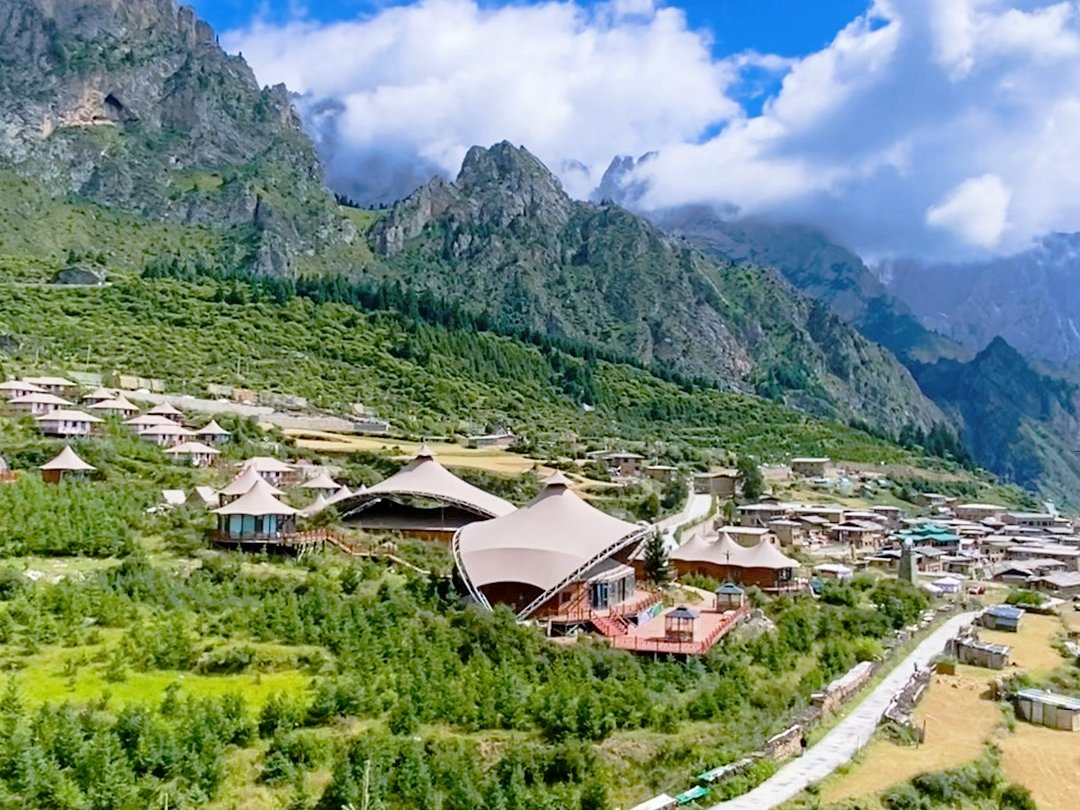
A Tibetan village wedged into a ring of grey stone peaks, with four mountain shrines around it and wooden houses stacked up the slope. Zhagana is skipped because Gansu is sold to foreigners as Silk Road desert, and because it takes a bus from Lanzhou or Hezuo. What you gain is the closest thing in China to a Tibetan village that has not become a stage set. Three days, June to September, walking the shrine circuit; the Zhagana travel guide has the village details.
4. Meili Snow Mountain, Yunnan
A sacred range on the Yunnan-Tibet border whose main peak, Kawagebo, has never been climbed and never will be. Meili is skipped because it is a two-hour drive from Shangri-La on a road that closes in winter, and because the best view is from a monastery balcony rather than a summit. What you gain is sunrise on a 6,740-metre face with almost no foreigners present. Do the Feilai Temple viewpoint at dawn in October or November, then walk to Yubeng if you have three more days.
Ranks 5–7: mistaken for a day trip
5. Mount Sanqing, Jiangxi
The mountains that look like Huangshan but empty. Sanqing is skipped because it sits between better-known stops on the Shanghai rail line and because its name means nothing in English. What you gain is the same granite theatre — pillars, cloud, pines — with Taoist temples instead of tour groups. Do the two-day circuit linking both cableways on foot. Late April to June. If you have already read the Huangshan guide, this is the sequel with fewer people.
6. Mount Wuyi, Fujian
Red sandstone cliffs above a clear river, tea terraces on the slopes, and a boat ride through nine bends. Wuyi is skipped because Fujian means Xiamen and tulou to most foreign visitors, and because the mountain does not look dramatic in photographs. What you gain is the most civilised mountain day in China: tea, river, short walks and no altitude. Two days, April to May or September to October; the Mount Wuyi guide explains the trails and the rock tea.
7. Mount Laoshan, Shandong
A granite mountain that rises straight out of the Yellow Sea beside Qingdao, with Taoist temples and a coastal path. It is skipped because it is treated as a suburb of a beer city, and because tour groups do the cable car and leave. What you gain is the only place in China where you can hike a ridge with the sea on both sides. One day, April to June or September to October. Take the coastal trail rather than the summit lift.
Ranks 8–10: famous in China, invisible abroad
8. Changbai Mountain, Jilin
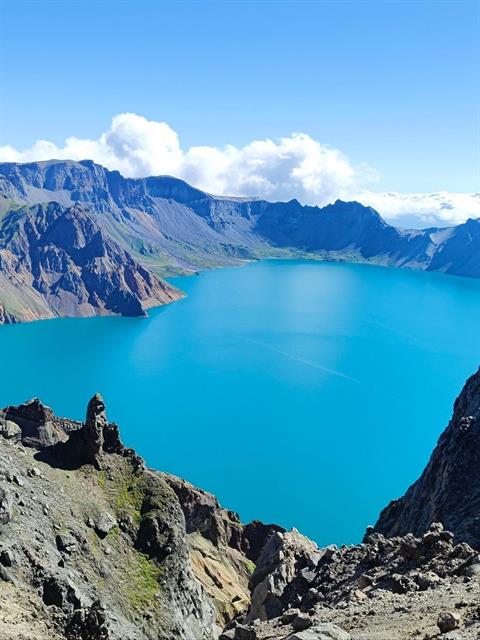
A volcano on the North Korean border with a crater lake, Tianchi, at 2,189 metres. Changbai is not hidden from Chinese or Korean tourists — it is one of the busiest mountains in the northeast — but it is almost absent from Western itineraries, which rarely go beyond Beijing. What you gain is a landscape found nowhere else in China: a blue caldera ringed by cliffs, with a waterfall draining north. Two days, July to September, and keep a spare morning because the lake hides in cloud; the Changbai guide covers the slopes.
9. Mount Qinling, Shaanxi
The east-west range that splits China into north and south, and the most biodiverse mountain system in the country: takin, golden monkey and a brown giant panda. Qinling is skipped because it has no single famous summit — it is a 1,500-kilometre wall, not a peak — and because Xi'an's visitors go to Hua instead. What you gain is forest, wildlife and valley villages rather than staircases. Two days from Xi'an, May to June or September to October, walking a section of the old pilgrimage trails.
10. Cangshan, Yunnan
Nineteen peaks above Dali, with a paved ridge path at 2,600 metres and Erhai Lake spread out below. Cangshan is skipped because foreign travellers use Dali as a backpacker stop and never look up. What you gain is the best half-day mountain walk in Yunnan: a cable car to the ridge, then two hours of level trail with the lake on one side and cloud forest on the other. One day, March to April. Easy enough for anyone.
Getting to them without a tour
Every mountain on this list is reachable independently, but the last hour is always the hard part. High-speed rail gets you to Shangrao, Wuyishan, Dali and Qingdao; from there a local bus or a taxi booked through a hotel covers the trailhead. For Siguniang, Zhagana, Meili and Gongga, a shared van from the nearest city is the normal solution and costs less than a private car.
Three habits make these trips work. Screenshot the Chinese name of the mountain and show it to drivers, because romanised names confuse people. Download an offline map before leaving the city, since signage is in Chinese and phone signal disappears above 3,000 metres. And carry cash, because a surprising number of trailhead stalls and village guesthouses still do not take foreign cards, even where mobile payment is universal.
When to go
October is the single best month for this list: Siguniang, Meili, Gongga and Wuyi are all at their clearest, and the domestic holiday rush ends in the first week. Late April to June is the second window, better for Sanqing, Laoshan and Cangshan, when the cloud is thick and the rhododendron is out.
Avoid July and August in Sichuan and Yunnan, when monsoon rain closes trails and hides the peaks; the exception is Changbai and Zhagana, which need the summer. Winter is underrated for the low mountains — Cangshan, Laoshan and Wuyi stay walkable — and closed for the high ones.
Watch the calendar rather than the thermometer. The first week of October and the week of Chinese New Year empty the cities and fill every scenic area, including the quiet ones on this list. A mountain that takes forty minutes to walk up on a Tuesday can take three hours on a Saturday in May, because domestic hiking clubs travel in groups of fifty. If your dates are fixed, go early, and pick the higher, harder option — the crowd thins with every hundred metres of ascent.
Where to go next
If the appeal here is scenery without the queue, Mount Fanjing is the next step up in strangeness, and Laojun Mountain in Henan has the same Taoist-summit drama with a fraction of Huangshan's visitors. Yandang Mountain in Zhejiang is a granite maze that most foreign itineraries miss entirely, and Lushan combines a mountain with a century of villas and poetry. For a longer route that strings several of these together, start with our guide to the best hiking trails in China.
Frequently asked questions
What makes a mountain hidden in China?
Not secrecy. These peaks are well known to Chinese hikers. They are hidden from the English-language itinerary: no package tours, few English reviews, and no direct train from a gateway city. The reward is a normal Chinese mountain day rather than a queue.
Are these mountains safe for foreign hikers?
Yes, with two caveats. Trails are marked in Chinese, so download offline maps and screenshot your route. And altitude above 3,500 metres is the real risk at Gongga, Siguniang and Meili, so build in acclimatisation days rather than arriving from Chengdu and climbing the next morning.
Which hidden mountain is easiest to reach?
Cangshan, because the cable car leaves from Dali, and Laoshan, an hour by bus from Qingdao. Both can be done as day trips from a city hotel. Sanqing and Wuyi are also straightforward, with high-speed rail to the nearest town.
Do I need a guide?
For Zhagana, Meili and rural parts of Qinling, a local driver or guide saves a day of confusion. Siguniang and Gongga trails are clear enough to walk alone if you have trekking experience. Guided day hikes are cheap and easy to arrange at the trailheads.
Can I combine several of these in one trip?
Two, comfortably. Siguniang and Gongga share the Chengdu approach; Zhagana pairs with the Gansu Silk Road; Meili sits beside Shangri-La. Trying to link Yunnan and Jilin in one trip means a long flight and wasted days.
When should I avoid these mountains?
Avoid Chinese New Year and the first week of October, when domestic crowds reach the popular ones. July and August bring monsoon rain to Sichuan and Yunnan, with trail closures. Winter closes the high passes but leaves Cangshan, Laoshan and Wuyi perfectly walkable.
Keep reading
Mountains
Tianchi Lake at Changbai Mountain: When the Crater Lake Appears
Tianchi — Heaven Lake — is the reason people fly to Changbai Mountain: a crater lake at about 2,190 m inside a …
Mountains
Mount Tai: Choosing a Route, Catching Sunrise and Sleeping on Top
Mount Tai rises 1,545 metres above the Shandong plain, a modest figure that has never been the point. What …
Mountains
10 Most Beautiful Mountains in China, Ranked
If you have time for exactly one mountain in China, make it Huangshan. If you have two weeks, the ten below …