China High-Speed Rail Guide: Booking, Seats and Station Tips
China’s high-speed trains are the easiest part of travelling here once you are aboard. The hard part is everything before: registering a passport on 12306, working out whether your ticket lives on your passport or on a paper slip, and understanding why the gate shuts five minutes before departure. This guide follows that sequence in the order you will meet it, and it is honest about the steps that still fail for foreign travellers.
It is written for someone who does not read Chinese and is planning a first trip, usually a mix of cities and mountains such as Huangshan or Zhangjiajie. You do not need a tour to use the network. You need to know which booking channel to trust, how station security works, and what to do when something goes wrong. The details below reflect how the system worked in 2025–2026; booking rules and app behaviour change, so confirm the current position in 12306 before you pay. For entry paperwork before any of this, start with the China visa guide.
Booking at a glance
| Channel | Passport handling | What it costs | Changes and refunds | Use it if |
|---|---|---|---|---|
| 12306 (official site and app) | You register the passport yourself; verification may need a station visit | Ticket price only | Full self-service, subject to the railway’s rules | You are comfortable with a clunky English interface |
| Third-party agents (Trip.com and similar) | You type the passport details; they handle the rest | Ticket price plus a booking fee | Usually handled by the agent, sometimes with a fee | You want English support and a card payment that works |
| Station counter | Passport in hand | Ticket price only | In person, same rules | You are already in China and tickets remain |
| Hotel or local friend | They book using your passport details | Ticket price, sometimes a small tip | They must act for you | You are staying somewhere with a helpful front desk |
What the network does well — and where it stops
China operates more than 40,000 kilometres of high-speed line, with trains running at 250 to 350 km/h on the main corridors. Departures are frequent, delays are rare, and the trains themselves are clean and quiet. Beijing to Shanghai takes about four and a half hours; Chengdu to Xi’an about three to four. On those routes the train beats flying once you count airport transfers.
Two limits matter for mountain trips. First, high-speed stations often sit on the edge of a city, so you still need a metro, taxi or bus at each end. Second, the network does not reach every trailhead: Huangshan North is roughly an hour by road from the Tangkou entrance, and Zhangjiajie West still requires a bus or taxi to the park. Cities also have more than one station, and tickets name the exact one. A ticket to “Tai’an” is not necessarily a ticket to the station you assumed, so check the Chinese characters and the pinyin before you book a connecting bus. If your dates are flexible, read best time to visit China before locking in holiday travel.
12306 versus third-party booking
12306 is the railway’s own system: the channel with the full inventory, no markup and the final word on availability. The English website and app are usable, some international cards now work, and there is no booking fee. Tickets typically go on sale around two weeks before departure, though the window changes and should be confirmed in the app. The obstacle is registration: your passport must be verified as ID, and that check sometimes fails online. When it does, you have to take the passport to a station counter before the account will let you pay.
Third-party agents solve that friction for a fee. You enter the passport details, pay with a familiar card, and receive an English confirmation. The trade-off is a service charge, less control over seat selection, and a refund process that runs through the agent rather than the railway. Station counters work fine if you have time and a translation app; they are the fallback when online sales have ended.
Book early for Chinese New Year, the first week of October, and the summer school holidays. On those dates popular trains sell out within minutes of release, and the remaining options are slow or indirect. Outside those windows, a few days’ notice is usually enough.
Passport registration and ticket collection
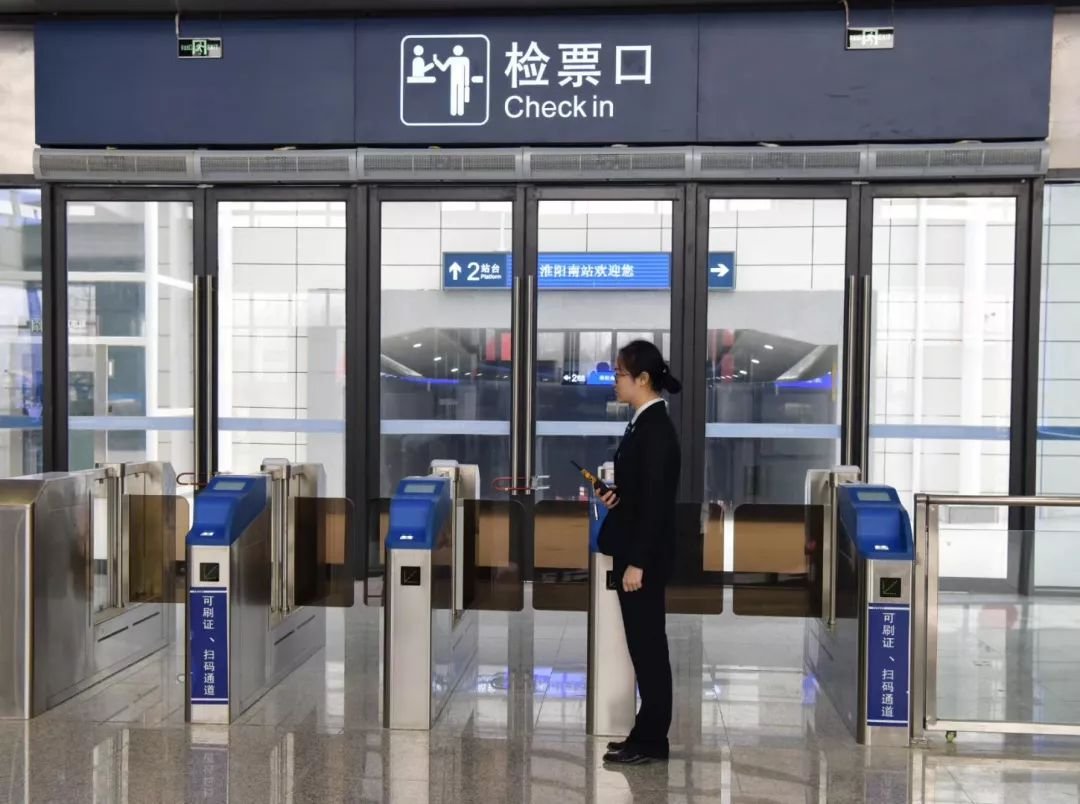
Enter your name exactly as it appears in the passport, surname first if the form asks for it that way. A middle name omitted or a hyphen misplaced can stop the gate from matching you, and fixing it at the station takes time. Once the booking is confirmed, the ticket is normally electronic and tied to the passport number. You do not need to collect anything: at the gate, place the passport on the reader or show it to the staff member, and the barrier opens.
There are exceptions. Some older machines and smaller stations still print a paper ticket, and some gates cannot read certain passports. If the barrier refuses you, step aside and use the staffed lane, showing the passport and the booking reference. Arrive early enough on your first journey to absorb this. If you booked through an agent, keep the confirmation email offline; station wifi is unreliable and the app may not load at the gate.
Seat classes, honestly compared
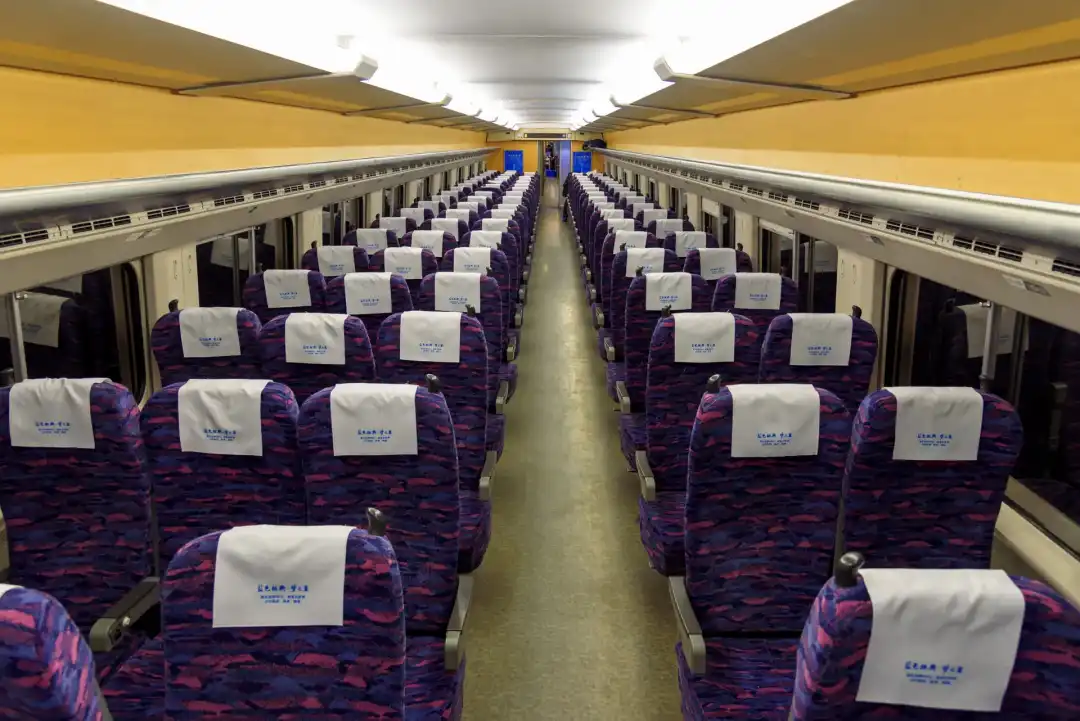
Second class is the default and the best value. Seats are arranged three and two across the aisle, with decent legroom, a tray table, a power socket and space overhead. It is busier and noisier than the front of the train, but perfectly comfortable for a four-hour run.
First class adds width and quiet: two and two across, more recline, and usually a calmer carriage. The supplement is moderate and worth considering on a long daytime leg. Business class is a different product, with lie-flat pods on some trains, much wider seats, and sometimes lounge access at major stations. It is priced like a premium airline cabin and rarely necessary.
On overnight high-speed D trains, the choice changes to sleepers: a four-berth soft sleeper, a two-berth deluxe compartment, or on slower conventional trains a six-berth hard sleeper. Lower berths cost more and are worth it if you are tall. Seat classes and sleeper layouts vary by train type, so read the carriage diagram at booking rather than assuming.
At the station: security, gates and transfers
Chinese railway stations work like small airports. You pass a security check with a bag scanner, then enter a departure hall with shops and waiting seats. Liquids are generally fine, but power banks and sharp objects can attract attention. Allow 45 to 60 minutes at a major station, and never plan to arrive at the platform time printed on your ticket: that is departure, not boarding.
Find your train on the departure board by train number rather than destination, since several trains may serve the same city. The gate usually opens 15 to 20 minutes before departure and closes five minutes before. Once through, follow the carriage numbers painted on the platform floor; the train stops for only a couple of minutes at intermediate stations.
Transfers deserve their own warning. A connection inside the same station needs 30 to 40 minutes; a connection between two stations in the same city needs two to three hours, because Beijing, Shanghai and Guangzhou all have several terminals far apart. If you are changing cities by rail and then heading to a mountain, consider an overnight stay rather than a tight same-day link. The Mount Tai guide is a good example of how much padding a station-to-trailhead transfer really needs.
Luggage, food and overnight trains
There is no weighed luggage allowance on high-speed trains, but there are practical limits. A large suitcase fits on the rack at the end of the carriage; overhead racks take daypacks and smaller cases. Escalators, not porters, move bags between levels, and platforms are long. Travelling with one wheeled bag and one pack makes everything easier.
Food is available from a trolley and, on many long-distance trains, a dining car. Hot water dispensers are standard, which is why Chinese passengers carry instant noodles and tea. Station food is plentiful but bland; buy fruit, bread and water before boarding. Eating is allowed at your seat, but drinking alcohol is not.
For overnight travel, high-speed sleepers are the comfortable option where they exist, while conventional Z, T and K trains are slower, cheaper and far more characterful. Book a lower berth, bring earplugs and an eye mask, and keep your passport and phone on you rather than in the luggage rack. Trains often arrive early in the morning, before hotel check-in, so plan where to leave your bags.
When things go wrong: missed trains, changes and refunds
If you miss a train, go straight to the ticket office rather than buying a new ticket. Chinese tickets can normally be changed once before departure, and staff will often move you to a later train the same day if seats are available. This is discretionary, not a right, and it is much harder at a small station with no English-speaking staff. A refund after departure is usually refused; before departure it is possible but carries a fee that rises as the date approaches.
The other common failure is the passport mismatch: a name typed wrongly, an expired passport, or a booking made under a different document. Staff can sometimes correct it at the counter, but not always, and the ticket may have to be refunded and rebooked. Check the passport number on your confirmation the moment you receive it. Delays do happen, but they are short and compensation is not automatic. Keep the booking app, a screenshot of the confirmation and a translation app handy; those three things solve most station problems.
Where to go next
Once the transport is sorted, the planning shifts to trails. The best hiking trails in China hub compares ten routes by difficulty and season. For multi-day walking, the trekking routes guide covers permits and guided options. Packing light matters more on trains than most people expect, so read what to pack for mountain hiking in China. If you are heading southwest, the Yunnan travel guide explains the Lijiang and Shangri-La connections, and the Kanas Lake guide shows what a long domestic flight plus road transfer looks like at the far end of the network.
Frequently asked questions
Can foreigners book Chinese train tickets on 12306?
Yes. The official 12306 website and app have English versions, and a foreign passport can be registered as your ID. The catch is identity verification, which sometimes fails online and must be completed at a station counter with your passport before payment works.
Do I need a paper ticket to board a Chinese train?
Usually not. Most high-speed tickets are electronic and linked to the passport you booked with, so you tap or show the passport at the gate. A few stations and ticket machines still issue a paper slip, and staff may ask for the booking number if the gate does not read your passport.
Which seat class should I choose on a Chinese high-speed train?
Second class is comfortable enough for most journeys and is where Chinese families sit. First class gives wider seats and a quieter carriage for a modest supplement. Business class is only worth it on long routes or if you specifically want the lie-flat seat.
How early should I arrive at a Chinese railway station?
Allow 45 to 60 minutes at a large station you do not know, and 30 minutes at a small one. Security is airport-style, the departure hall can be enormous, and gates typically close five minutes before departure with no exceptions.
What happens if I miss my train in China?
Go to the ticket office immediately. A ticket can usually be changed once before departure, and staff may move you to a later train the same day if seats exist. After departure a refund is normally refused, so do not simply buy a second ticket before asking.
Are overnight high-speed trains worth taking?
On the right route, yes. Sleeper-equipped D trains save a hotel night and arrive in the morning, but they are slower than daytime G trains and not available on every corridor. Conventional Z, T and K trains are cheaper and much slower.
Keep reading

Travel Planning
Best Time to Visit China: Month by Month and Region by Region
China is too large for a single best season. A beach in Hainan, a glacier in Sichuan and a bamboo hill outside …

Travel Planning
20 Best Places to Visit in China, Region by Region
China is too large to rank as one list, so this one is organised the way you actually travel: by region. …

Travel Planning
China Visa and Entry Guide: Visa-Free Rules, Transit and L Visas
China’s entry rules are more generous than they were a few years ago, and more confusing for exactly that …