Best Trekking Routes in China: Five Classic Multi-Day Treks
China has the terrain for world-class trekking and almost none of the infrastructure signals that hikers from Europe or North America expect. There is no unified booking site, no reliable English trail map, and no assumption that a foreigner will turn up at a trailhead alone. The routes themselves are extraordinary; the planning is where trips succeed or fail. This guide covers five routes that between them span warm-weather gorge walking, high Sichuan valleys, a Tibetan pilgrimage and a low-altitude tea mountain.
It is written for a first-time visitor who wants to walk for several days without joining a tour bus. The first decision is whether to book a package or organise it yourself, and that decision depends far more on permits and altitude than on fitness. The second is season: a route that is gentle in October can be dangerous in July. Start with the comparison table, then read the route that fits your experience.
Five routes at a glance
| Route | Region | Days | High point | Difficulty | Permits and guides | Best months |
|---|---|---|---|---|---|---|
| Tiger Leaping Gorge | Yunnan, near Lijiang | 2–3 | About 2,650 m | Easy to moderate | Scenic-area ticket only; no guide needed | March–May, September–November |
| Gongga | Sichuan, near Kangding | 6–8 | About 4,900 m | Hard | Local registration; guide or horse support strongly advised | May–June, September–October |
| Kailash kora | Tibet, Ngari | 3 trekking days within a 10–14 day trip | Dolma La, 5,630 m | Hard, mainly for altitude | Tibet permit via licensed operator; guide mandatory | May–October |
| Siguniang | Sichuan, near Xiaojin | 3–4 | About 3,900 m | Moderate to hard | Park ticket and registration; guide for upper valleys | May–June, September–October |
| Wuyi | Fujian, near Wuyishan | 2–3 | Under 1,000 m on main trails | Easy | Park ticket; no guide | March–May, September–November |
Tiger Leaping Gorge: the best first trek in China
The gorge cuts between Jade Dragon Snow Mountain and Haba Snow Mountain, with the Yangtze roaring several hundred metres below the high trail. The classic route is 22 to 25 kilometres from Qiaotou to Tina’s Guesthouse, usually walked over two days with a night at a Naxi family guesthouse. The infamous 28 Bends come early; after that the path contours along the mountainside with views that never stop improving.
This is the one route on the list where a solo foreigner can simply arrive, buy the scenic-area ticket and walk. Guesthouses are signposted, beds are basic but clean, and luggage can be sent ahead by road. Go with a daypack, start early, and avoid the June-to-September rains, when rockfall closes sections. The Tiger Leaping Gorge trek guide covers the stage-by-stage plan.
Gongga: Sichuan’s high-altitude circuit
Gongga, or Minya Konka, rises to 7,556 metres and dominates the ranges west of Kangding. The classic trek works around its western flanks through conifer forest, yak pastures and moraine, crossing passes close to 4,900 metres. It takes six to eight days, involves camping or basic lodge stays, and requires genuine weather judgment: the mountain makes its own cloud, and snow can close a pass in an afternoon.
There is no cable car and no shortcut. Most parties hire horses for gear and a local guide in Kangding, and registration at the trailhead is increasingly enforced. Go in May, June, September or October. Read the Gongga hiking guide for route options, and the honest difficulty breakdown before assuming your fitness will carry you through the altitude.
Kailash kora: Tibet’s three-day pilgrimage
The kora around Mount Kailash is 52 kilometres, usually walked in three days clockwise, with a night at Darchen before and after. The high point is the Dolma La pass at 5,630 metres, reached on the second day after a long climb from a valley camp. Tibetans complete the circuit in one long day; foreigners should not try. The combination of altitude, distance and weather is serious even for experienced walkers.
Foreigners cannot do this independently. You need a Tibet Travel Permit arranged through a licensed Tibetan operator, plus an additional permit for the Ngari region, and you travel with a guide and a registered vehicle. The whole trip usually runs 10 to 14 days from Lhasa, including the drive west. The Kailash pilgrimage guide explains the permit sequence and the kora stages.
Siguniang: valleys below the Four Girls
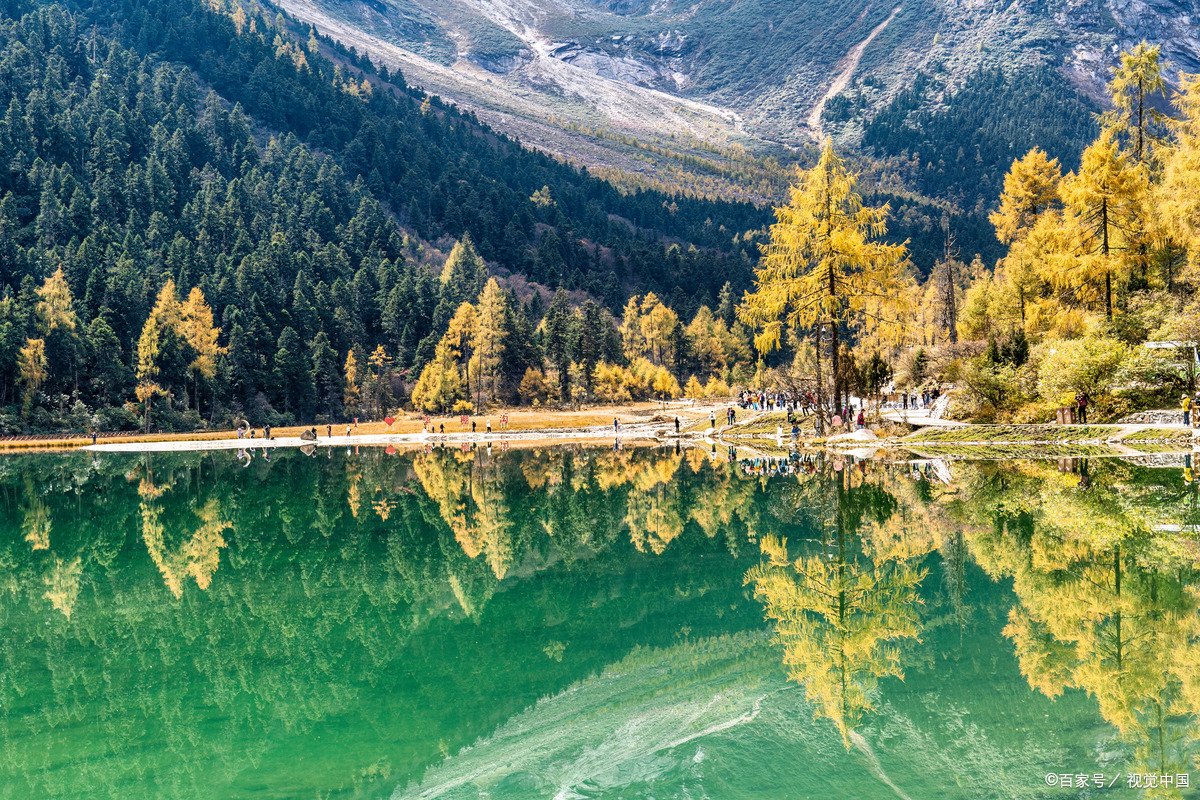
Siguniang Shan, the Four Girls Mountain, sits above the town of Rilong at the edge of the Tibetan plateau. Three valleys fan out from the town: Shuangqiao for easy boardwalk sightseeing, Changping for a three-day out-and-back beneath the peaks, and Haizi for a harder high-valley route. The classic trek is Changping, camping at two increasing altitudes before turning around below the mountain wall.
Rilong is 3,200 metres, so even the first night is a mild altitude test. Horses can carry gear, and local guides are easy to arrange in town, but the upper valleys require registration and are not a place to wander without a plan. The Siguniang travel guide covers transport from Chengdu and valley-by-valley options.
Wuyi: tea mountains and low-altitude walking
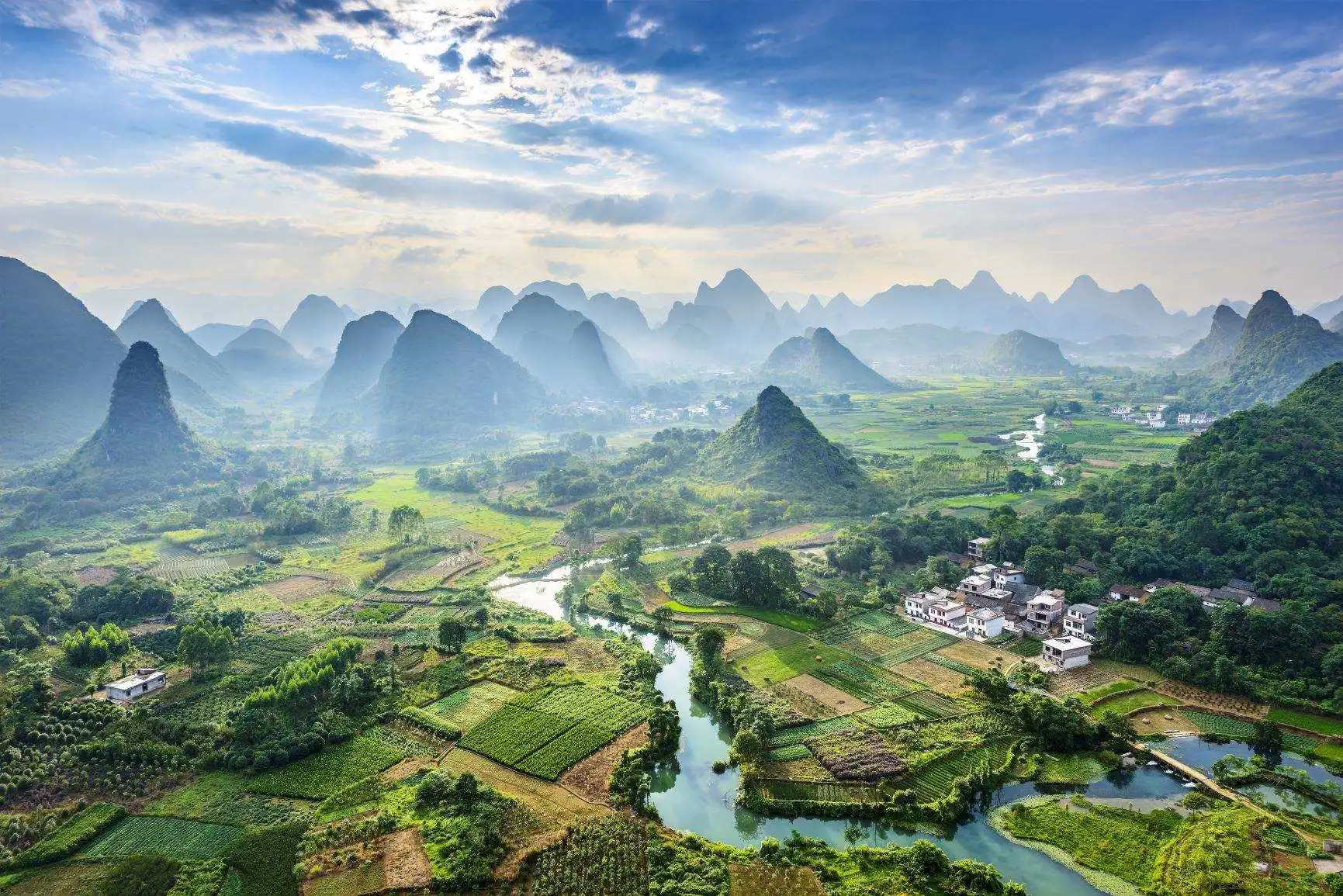
Wuyi Shan in Fujian is a UNESCO landscape of red sandstone peaks, sheer cliffs and tea terraces, with the Nine-Bend River winding between them. It is not a high-altitude wilderness. The walking is a network of stone paths linking temples, viewpoints and gorge sections, best spread over two or three days and combined with a raft trip on the river.
This is the route to choose if you want scenery and culture without expedition logistics. Guesthouses in the resort town are comfortable, trails are marked, and the main difficulty is summer heat and humidity rather than exposure. It also pairs easily with a train journey from Xiamen or Fuzhou. See the Mount Wuyi guide for the main scenic areas.
What “adventure packages” actually sell
Operators selling “China adventure packages” are mostly assembling the same components you could book yourself: a vehicle and driver, a guide, permits, porters or horses, meals, tents, and a night or two in a hotel before and after the trek. What varies is how honestly those components are described. A good quote lists each item, names the permit being obtained, states the guide’s language and licence, and explains what happens if weather closes the route.
Watch for the gaps. “Trekking in Tibet” is meaningless unless the operator is a licensed Tibetan agency that can actually obtain the permits; several generic travel agents simply subcontract and add a margin. “All meals included” may mean plain noodles for eight days. “Guide” may mean a porter who knows the path but speaks no English. “Insurance included” is often a minimal local policy that excludes high-altitude walking and helicopter evacuation.
Packages make sense for Kailash, for Gongga in bad weather, and for anyone whose Chinese is limited and whose time is short. They make less sense for Tiger Leaping Gorge or Wuyi, where the logistics are simple and a fixed itinerary mainly removes flexibility. Compare a private quote with a group departure, ask for the cancellation terms in writing, and budget for a weather day. The best hiking trails hub is useful for judging which routes suit self-organisation.
Permits, altitude and insurance
Permits fall into three rough categories. Scenic areas such as Tiger Leaping Gorge, Wuyi and Siguniang require an entrance ticket and sometimes a registration at the gate. Tibetan regions require a Tibet Travel Permit obtained by a licensed operator, usually three to four weeks ahead, and Kailash adds the Ngari permit. Remote Sichuan valleys increasingly ask for local registration and a guide, a rule that changes by county.
Altitude is the second filter. Above 3,000 metres, sleep low, ascend slowly and build in a rest day. Headache and nausea are early warnings; confusion, breathlessness at rest and loss of coordination mean descend, not rest. A pulse oximeter is cheap and useful, but it does not replace judgment. Carry a paper copy of your insurance, check that it covers trekking above your route’s high point, and confirm the evacuation procedure before you go.
Finally, plan for cash and time. Guesthouses and trailhead offices may not accept foreign cards, and road transfers in remote areas take longer than the map suggests. A rest day and a buffer day are not padding; they are the difference between a trip that works and one that becomes a scramble.
Where to go next
If you have not fixed your dates, read best time to visit China before booking anything. Packing for a high valley is different from packing for a gorge, and what to pack for mountain hiking in China covers both. The high-speed rail guide explains how to reach Kangding, Lijiang and Wuyishan without a tour, while the best scenic spots in Sichuan and the Yunnan travel guide help you build a route around the trek rather than a trek around the route.
Frequently asked questions
Do I need a guide to trek in China?
It depends on the route. Tiger Leaping Gorge and Wuyi can be walked independently with no guide at all. Kailash is legally guide-only for foreigners, and Gongga and Siguniang increasingly require registration or a local guide. Always confirm the current rule for the specific valley before you commit.
How fit do I need to be for a multi-day trek in China?
You should be able to walk 15 to 20 kilometres with a daypack on consecutive days and climb stairs without stopping. Altitude, not distance, is the real test: routes above 3,500 metres demand acclimatisation days. Train on hills for six to eight weeks before departure.
When is the best season for trekking in China?
Late spring and autumn work almost everywhere: May to June and September to October. Yunnan is also good in November, while Tibet’s Kailash is open roughly May to October. Avoid July and August in Sichuan and Yunnan, when monsoon rain brings landslides and leeches.
How much does a guided trek package cost?
There is no fixed price. Operators quote per person based on group size, season, permit costs, porter numbers and hotel standard. A quote should itemise transport, permits, guide, meals, tents and evacuation cover. International flights, personal gear, tips and travel insurance are normally extra.
Can foreigners trek in Tibet independently?
No. Foreign travellers need a Tibet Travel Permit arranged through a licensed Tibetan tour operator, and for Kailash an additional permit for the Ngari region. You travel with a guide and a registered vehicle. Applications take time, so start at least a month before your planned entry.
What should I know about altitude sickness?
Above 3,000 metres, ascend slowly, sleep low and drink water. Headache, nausea and breathlessness are warning signs; confusion and loss of balance mean descend immediately. Carry a pulse oximeter, know your insurance terms, and do not treat summit day as negotiable if you feel unwell.
Keep reading
Hiking & Trekking
Wugongshan: The Two-Day Grass Plateau Hike in Jiangxi
Most Chinese mountains are about rock and temples. Wugongshan is about grass. Above roughly 1,600 m the trees …
Hiking & Trekking
Yubeng Village Trek: Four Days Below the Meili Snow Mountains
Yubeng is a Tibetan village of about forty households sitting at 3,100 m under the Meili Snow Mountains, and …
Hiking & Trekking
How Hard Is Gongga Trekking? Altitude, Day Lengths and Honest Comparisons
Gongga has a reputation in China that travel brochures rarely explain. People say it is wild, unpredictable …