Best Scenic Spots in Sichuan: Altitude, Buses and Honest Advice
Sichuan is not one trip
The mistake almost every itinerary makes is treating Sichuan as a single destination radiating from Chengdu. It is really three separate journeys: a northern circuit of coloured lakes around Jiuzhaigou, a western plateau run to Daocheng Yading, and a settled eastern belt of tea hills and temple mountains within a few hours of the city. Mixing all three in ten days means six of those days are spent travelling.
This page is about which of those trips to take and what each one demands in altitude, road time and advance planning. If you are still choosing between provinces, read the southwest China comparison first. If you want the landscape-designation angle — what counts as a national park and why — that is covered separately in the national parks guide.
Chengdu is not a stopover, whatever the flight schedules suggest. Two nights there pays for itself in acclimatisation, food and the panda base, and it is the only place in the province where a rainy day improves the plan rather than ruining it. Teahouses, a decent museum and more Sichuan pepper than is strictly advisable: treat the city as part of the trip, not a bus station.
The altitude ladder
Altitude, not distance, is the variable that decides whether a Sichuan trip is enjoyable. The numbers below are approximate but the gaps between them are real, and they explain why some itineraries feel fine and others feel like a hangover that will not lift.
| Place | Typical altitude | Road time from Chengdu | Days needed | Verdict |
|---|---|---|---|---|
| Mount Emei summit | 3,100 m | 2 hours by rail | 2 | Easy, worth it |
| Ya’an tea hills | 1,000–1,450 m | 2 hours | 1–2 | Underrated |
| Jiuzhaigou | 2,000–3,100 m | 8–9 hours, or fly | 3–4 | Worth the effort |
| Huanglong | 3,200–3,600 m | Same circuit | 1 | Worth it once |
| Siguniang (Rilong) | 3,200 m | 5–6 hours | 3 | Best hiking base |
| Daocheng Yading | 3,900–4,700 m | 2 days, or fly | 4–5 | The big one |
Jiuzhaigou and Huanglong: the north circuit
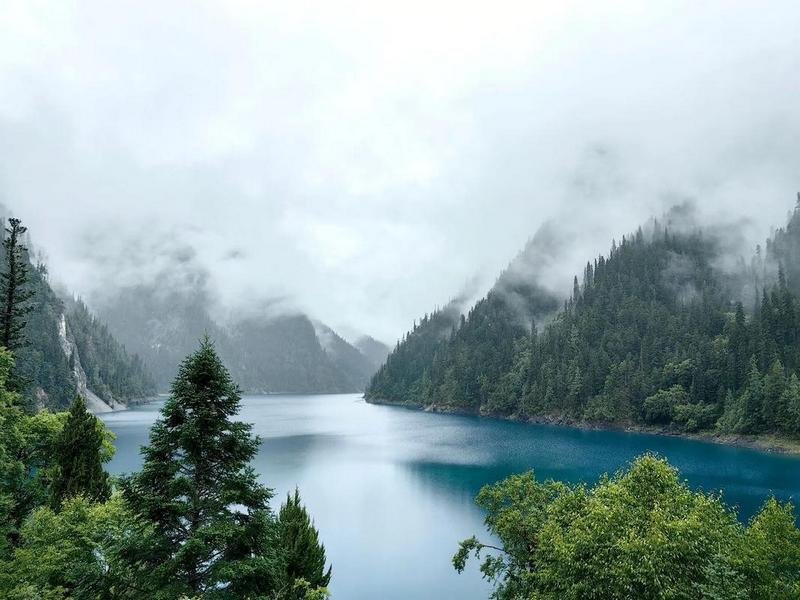
Jiuzhaigou is the most photographed valley in China and, unusually, deserves it. The lakes are genuinely that colour — calcium carbonate and algae, not filters — and the boardwalk system keeps you moving through a Y-shaped valley in a single long day. Go in late October for the forest colour, book the timed entry days ahead, and accept that you will share every viewpoint with several thousand people.
Two days rather than one is the better call: the second morning lets you reach the upper valley before the tour groups and photograph the Five Flower Lake without a forest of selfie sticks in front of it. The 2017 earthquake damage is largely repaired, and the rebuilt access is smoother than the old route.
Huanglong, an hour or so further north over a 3,800-metre pass, is a different proposition: a staircase of travertine pools on a mountainside at 3,200–3,600 metres. Take the cable car up, walk the boardwalk down, and give it half a day. It is beautiful and slightly repetitive, and anyone short of time can skip it without regret. The two combine naturally via the small town of Chuanzhusi, which exists almost entirely to feed and house people doing exactly this circuit.
The access road is the weak point. It runs through a mountain pass that closes in heavy snow, and flights into the regional airport are cancelled often enough that a same-day international connection home is a bad idea. Budget a spare night in Chengdu at the end of the northern circuit, and travel light enough to switch to a bus if the flight goes.
Daocheng Yading: the far west
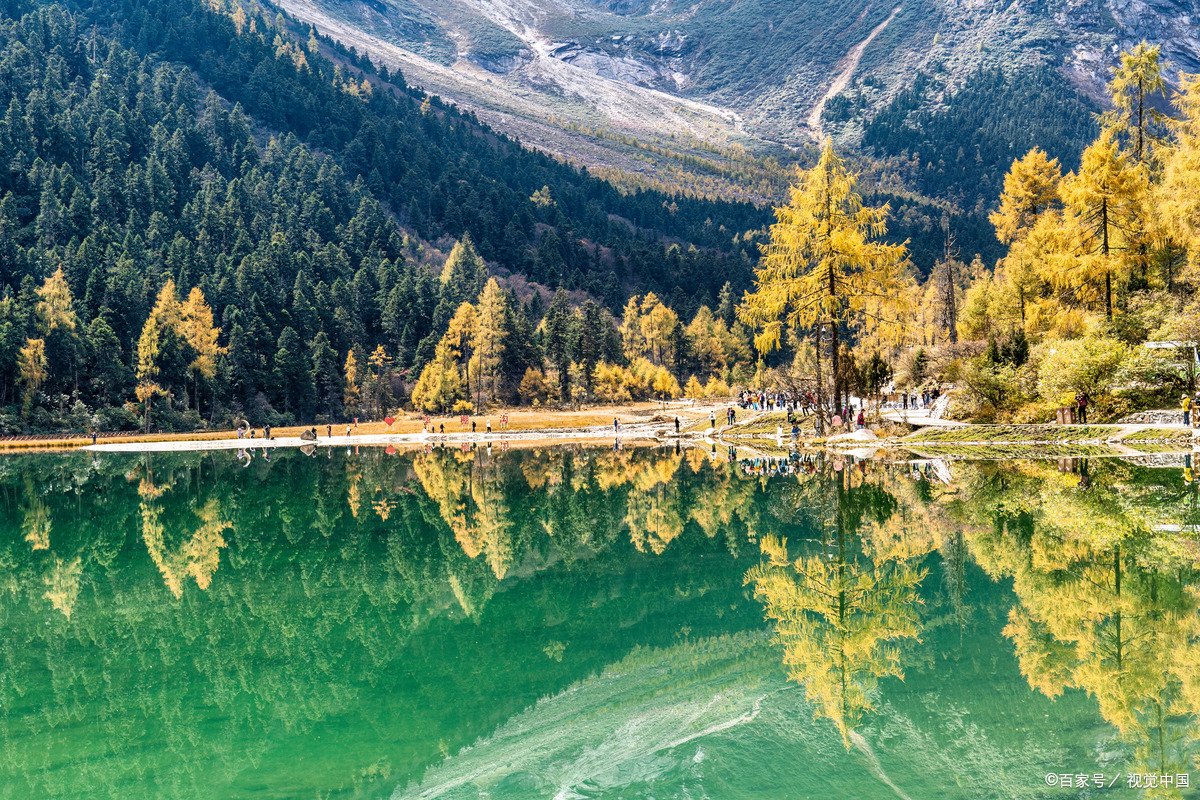
Yading is the reason to give Sichuan two weeks. Three sacred peaks — all above 5,900 metres — ring a valley of glacial lakes and larch forest, and the Tibetan village at the entrance sits at roughly 3,900 metres. The classic day walk goes from Chonggu Monastery to Milk Lake and Pearl Lake, topping out around 4,600 metres. It is not technically hard, but at that altitude a two-hour climb becomes a four-hour one.
Getting there is the price. You either fly into Daocheng Yading airport — one of the highest in the world, which is exactly as rough on the body as it sounds — or drive two long days from Chengdu over passes that close in snow. The drive is extraordinary and the flight is efficient, but arriving by air at 4,400 metres and walking uphill the next morning is how people end up in a clinic. Fly in, then give yourself a full day of doing nothing.
Siguniang and Gongga: the western edge
Mount Siguniang — Four Girls Mountain — is the best-value mountain base in the province. The gateway town of Rilong sits at 3,200 metres with guesthouses, and three valleys radiate from it: Shuangqiao for a scenic drive, Changping for a full-day walk to a glacial lake, Haizi for a shorter outing. Changping is the one to do. It is 12 kilometres of gradual climbing through birch and juniper to a lake below the peak, and it delivers more mountain per hour of effort than anything else in Sichuan.
Gongga is the opposite experience: at 7,556 metres it is the highest peak in China outside the Himalaya, and it is not a tourist attraction. Trekking around it takes a week or more of expedition logistics and serious altitude. The Mount Gongga hiking guide sets out the routes, and the honest difficulty assessment is worth reading before you convince yourself you are ready. For most visitors the sensible compromise is Hailuogou, the glacier park on Gongga’s eastern flank, where a cable car takes you to a viewing platform above the ice. Access there has been disrupted by earthquakes in recent years, so confirm it is open before building a trip around it.
Mount Emei: the easy win
Mount Emei is the one Sichuan mountain you can do properly in two days from Chengdu, and it is the only one where the infrastructure helps rather than intrudes. A bus and cable car combination puts you at the Golden Summit at 3,099 metres for sunrise or sunset, with a 48-metre bronze statue of Samantabhadra facing the clouds. The walking routes up through the forest — past Qingyin Pavilion and the monkey colonies — are excellent if you have a third day.
Be honest about what you are buying: the summit is a viewing platform and a pilgrimage site, not wilderness. On a clear morning the sea of cloud below is one of the great sights of China. On a cloudy one it is a very expensive bus ride. Check the summit webcam before you commit. The full guide to the mountain, including the temple route and the monkey warnings, is in this account of Mount Emei.
Ya’an and the tea country: the underrated one
Almost nobody puts Ya’an on a Sichuan itinerary, which is precisely why it works. Two hours south-west of Chengdu, the hills around Mengding Mountain are the historic birthplace of cultivated tea in China, terraced in green rows at around 1,000–1,450 metres, with tea houses where you can drink the local leaf at the source. It is a half-day of gentle walking and a long lunch, not a scenic area with a ticket gate.
Nearby, Bifengxia adds a gorge walk and a panda base that is quieter than the Chengdu breeding centre. This is the section of the trip to schedule for the day after a long bus ride, when nobody wants another mountain. It is also the best place in the province to buy tea that has not been repackaged for tourists.
Buses, permits and the honest logistics
Chengdu is the hub for everything. High-speed rail handles Emei and the eastern cities comfortably; buses from the main long-distance stations cover the west, with the Jiuzhaigou run taking the better part of a day and the Yading run taking two. Domestic flights to Jiuzhaigou and Daocheng save days but are frequently delayed by weather, so never book a tight connection home.
Permits are less of a headache than rumour suggests — the main scenic areas need no special permission, only tickets — but routes close to the Tibet border can require permits or guided access, and the rules shift. Check current rules before committing to a western loop, and carry your passport at all times; it is required for tickets, hotels and police checks.
Tickets are the other planning trap. Jiuzhaigou and Emei both cap daily visitor numbers in peak season, and both sell through official mini-programs rather than walk-up windows. Expect to pay about ¥190 plus a shuttle fee for Jiuzhaigou, and about ¥80 per valley at Siguniang. Book before you leave Chengdu, because the Wi-Fi in the mountains is not your friend. For long-distance rail bookings, the China high-speed rail guide covers the passport process.
Where to go next
To understand how these places are officially classified — and which other protected areas are worth the trip — read China’s national parks explained. If you want more trekking rather than more driving, the best trekking routes in China puts Siguniang and Gongga alongside comparable routes. For a quieter stone-village alternative on the Gansu side of the plateau, see Zhagana. Time your visit with the best time to visit China, and if altitude worries you, plan the trip around Emei and Ya’an rather than Yading.
Frequently asked questions
What is the best scenic spot in Sichuan?
Jiuzhaigou for sheer density of colour, and Daocheng Yading for scale and silence. If you only have one week and no tolerance for altitude, Mount Emei delivers more for less effort than either.
How do you get to Jiuzhaigou from Chengdu?
By air to Jiuzhaigou Huanglong airport, then an hour or two by road, or by a long bus from Chengdu that takes most of a day. The drive is scenic but slow, and winter snow can close the pass.
Is Daocheng Yading too high for most travellers?
The village sits near 3,900 metres and the lakeside trails climb past 4,500. Fit travellers who acclimatise for two days cope well. Anyone with heart or lung conditions should treat it as a serious altitude trip.
Do you need a permit for western Sichuan?
Not for the main scenic areas. Some routes near the Tibet border require permits or guided access, and rules change without much notice, so check current rules with your hotel or agency before heading west.
How many days do you need in Sichuan?
A week covers Chengdu, Emei and one mountain. Two weeks is the minimum for Jiuzhaigou plus western Sichuan, and even then you spend a lot of it in a vehicle.
When should you avoid Sichuan?
Avoid the first week of October, when domestic holidays make Jiuzhaigou and Emei unbearable, and avoid July and August in the lowlands, which are hot, humid and frequently wet.
Keep reading
Regions
Yunnan Travel Guide: Routes, Rail and Altitude, Done Right
What this guide is for Yunnan is roughly the size of Japan, and within 300 kilometres of Kunming the ground …
Regions
Best Places in Southwest China: Where to Go With Two Weeks
Everyone planning a trip to this corner of China asks the same thing in slightly different words: I have two …