20 Best Places to Visit in China, Region by Region
China is too large to rank as one list, so this one is organised the way you actually travel: by region. Twenty places, five of them mountain days you can do from a city hotel, several that need three days and a backpack, and a handful that are towns or lakes rather than peaks — because a trip built only from summits wears you out by day nine.
The short version: choose north for history and grassland, east for the classic postcard scenery and the best rail connections, southwest for altitude, gorges and food, and west for emptiness and desert. Most first-time visitors should take the east and add one southwestern detour. The table below gives the honest numbers — days, season, difficulty — before the entries explain why each place earns its slot.
Twenty places at a glance
| Rank | Place | Province | Nearest hub | Days | Best month | Difficulty |
|---|---|---|---|---|---|---|
| 1 | Mount Tai | Shandong | Tai'an | 1–2 | Sep–Oct | Moderate |
| 2 | Mount Hua | Shaanxi | Xi'an | 1–2 | Apr–May, Sep–Oct | Hard |
| 3 | Hulunbuir Grassland | Inner Mongolia | Hailar | 4 | Jul–Aug | Easy |
| 4 | Huangshan | Anhui | Huangshan North | 2 | Oct–Nov | Moderate |
| 5 | Zhangjiajie | Hunan | Zhangjiajie | 3 | Apr–Jun, Sep–Nov | Moderate |
| 6 | Mount Sanqing | Jiangxi | Shangrao | 2 | Late Apr–Jun | Moderate |
| 7 | Mount Wuyi | Fujian | Wuyishan | 2 | Apr–May, Sep–Oct | Easy |
| 8 | Guilin and Yangshuo | Guangxi | Guilin | 3 | Apr–Oct | Easy |
| 9 | Longji Rice Terraces | Guangxi | Guilin | 1 | May–Jun, Sep | Easy |
| 10 | Mount Emei | Sichuan | Chengdu | 2 | Jun–Oct | Moderate |
| 11 | Jiuzhaigou Valley | Sichuan | Jiuzhaigou | 2 | October | Easy |
| 12 | Tiger Leaping Gorge | Yunnan | Lijiang | 2 | Apr–May, Sep–Oct | Moderate |
| 13 | Mount Qingcheng | Sichuan | Chengdu | 1 | Mar–Apr, Oct | Easy |
| 14 | Lijiang Old Town | Yunnan | Lijiang | 2 | Mar–Apr, Oct | Easy |
| 15 | Huanglong | Sichuan | Chengdu | 1 | Sep–Oct | Easy |
| 16 | Kanas Lake | Xinjiang | Burqin | 3 | September | Moderate |
| 17 | Mount Kailash | Tibet | Lhasa | 5 | Jun–Sep | Hard |
| 18 | Qinghai Lake | Qinghai | Xining | 2 | Jul–Aug | Easy |
| 19 | Zhangye Danxia | Gansu | Zhangye | 1 | Jun–Sep | Easy |
| 20 | Everest North Base Camp | Tibet | Lhasa | 5 | Apr–May, Sep–Oct | Hard |
North China: imperial stone and open grass
The north is not where the postcard peaks are, and that is its advantage. You come here for weight — the mountain emperors climbed, the cliff where dynasties changed hands — and for the flat, enormous landscapes that make the Chinese interior feel like a different country.
1. Mount Tai, Shandong
The one mountain in China that doubles as a history lesson: emperors came here for three thousand years to report to heaven, and the stone steps they widened are still the route up. It is a night climb, a sunrise and a hangover of a morning, and it works. Go in September or October, start from Hongmen around midnight, and read the Mount Tai travel guide before you choose which of the three ascents suits your legs.
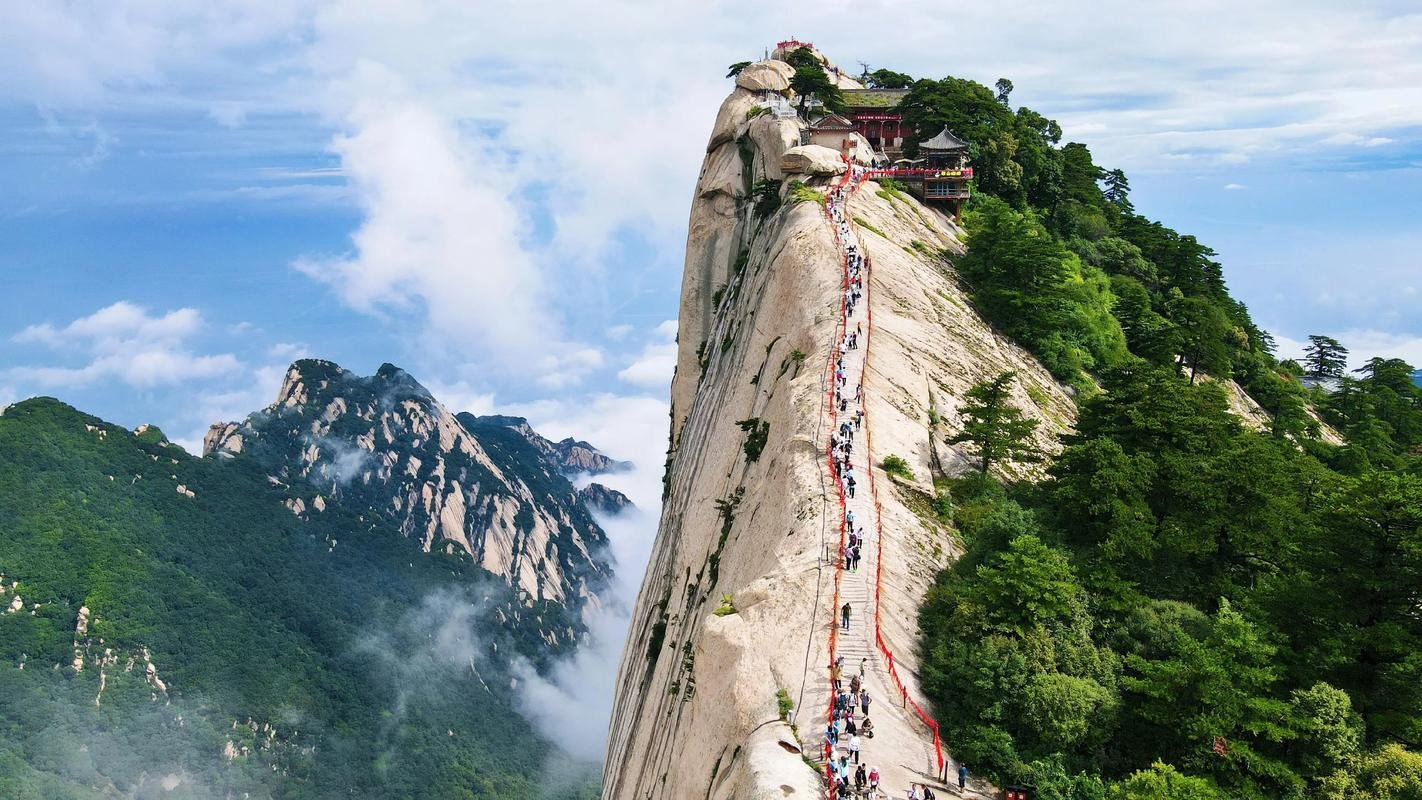
2. Mount Hua, Shaanxi
The antidote to Mount Tai's crowds and ceremony. Hua is raw granite, five peaks, and staircases badged with warnings; the plank walk is a genuine exposure experience rather than a photo prop. Base yourself in Xi'an, take the morning train, and give it a full day. April to May or September to October, and the Mount Hua hiking guide is worth reading even if you plan to take every cable car.
3. Hulunbuir Grassland, Inner Mongolia
Not a mountain at all, which is why it belongs on a list otherwise full of them. Hulunbuir is the largest contiguous grassland in China: rivers looping through empty country, horsemen, and a horizon that stays level for hours. Four days by car from Hailar, ideally in July or August, staying with herding families. It resets your sense of scale after a week of staircases.
East China: the classic corridor
This is the region to choose if you have ten days and want the scenery you have seen on banknotes. The rail line from Shanghai through Anhui, Jiangxi, Fujian, Hunan and Guangxi strings together most of the list, which means you can move every second day without losing one to transit.
4. Huangshan, Anhui
Granite spires, pines rooted in cracks, and clouds that fill the valleys below the path. Huangshan is the most painted mountain in the world and still exceeds the paintings, largely because of the light at dawn. Two days is right: up by cable car, sleep on the summit, walk the western circuit at sunrise. Late October and November are the clearest months. Route detail is in the Huangshan hiking guide.
5. Zhangjiajie, Hunan
Three thousand sandstone pillars in a forested valley, viewed from clifftop walkways and glass bridges. It is the most foreigner-friendly big scenery in China and also the most crowded, so the trick is to sleep inside the park and walk the Golden Whip Stream before the shuttles start. Three days, April to June or September to November. The Zhangjiajie route guide explains the four separate parks that share the name.
6. Mount Sanqing, Jiangxi
Huangshan's scenery without Huangshan's queue: granite pillars, Taoist temples on the summits, and a two-day circuit that links the two cableways on foot. It is the best value mountain in eastern China for anyone willing to walk five hours. Go late April to June, when cloud and rhododendron arrive together, and stay near the middle station rather than at the base.
7. Mount Wuyi, Fujian
A softer mountain: red sandstone cliffs above a clear river, tea terraces on the slopes, and a nine-bend boat ride that does most of the work for you. Wuyi earns its place because it is the one entry you can do with children or a hangover. Two days, April to May or September to October, and drink the rock tea where it is grown. The Mount Wuyi guide covers the trails and the tea.
8. Guilin and Yangshuo, Guangxi
The karst towers on the twenty-yuan note, best seen from a small boat at dawn before the cruise fleet appears. Base in Yangshuo rather than Guilin, cycle the Yulong River, and take one Li River trip rather than three. Three days, April to October. It is the easiest landscape in China to photograph badly and the hardest to forget.
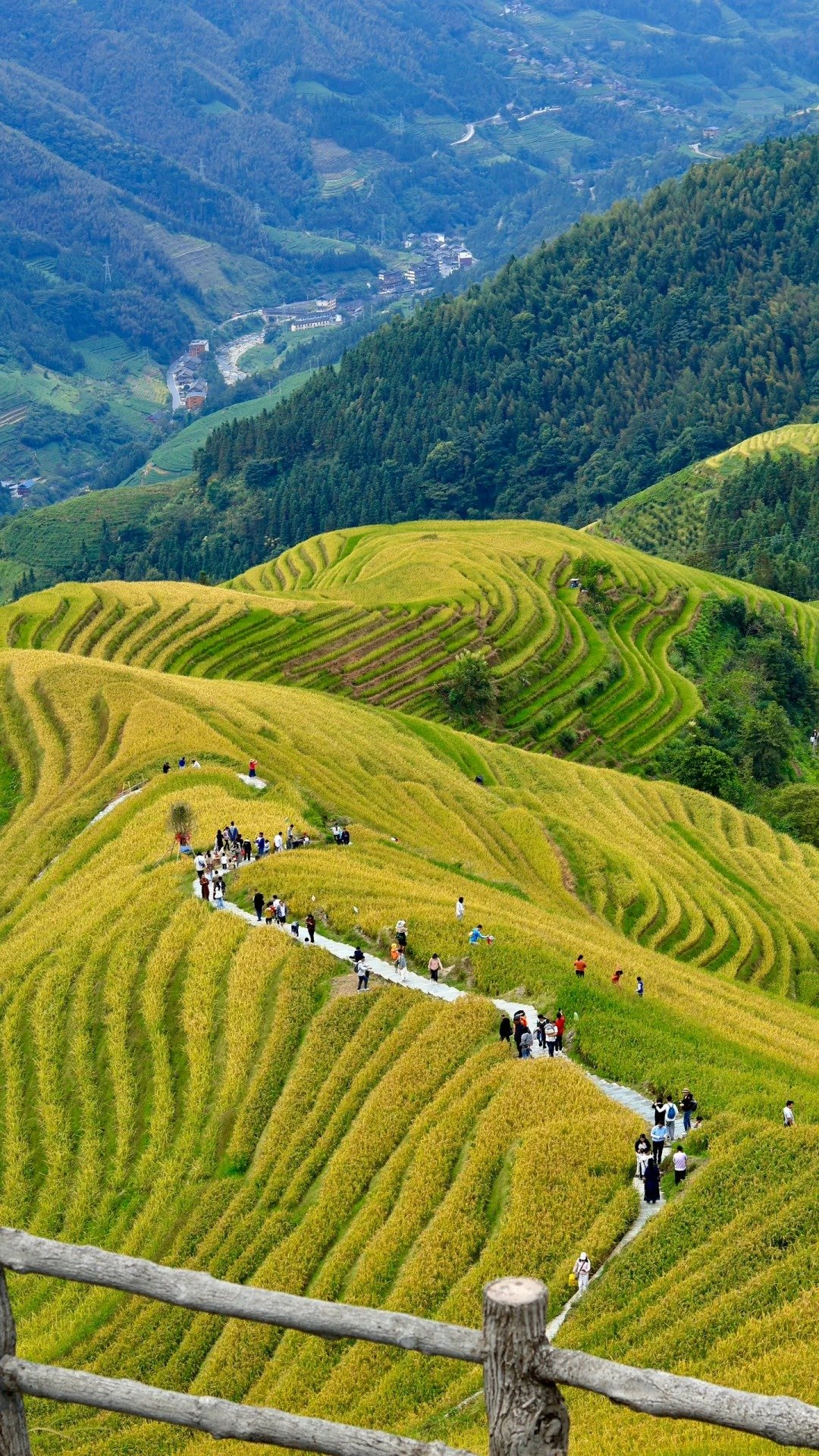
9. Longji Rice Terraces, Guangxi
Terraces built by hand over seven centuries, stacked so tightly that the valley turns into a staircase of water and light. Come for one night, stay in Ping'an, and walk the ridge to Dazhai in the morning. May and June for flooded paddies, September for gold. It pairs naturally with Yangshuo, three hours away by road.
Southwest China: altitude, gorges and food
The southwest is the richest region in the country for landscape and the hardest to do quickly. Sichuan and Yunnan between them hold snow peaks, Tibetan valleys, a gorge deeper than the Grand Canyon and the best food in China. Allow two weeks, and accept one internal flight.
10. Mount Emei, Sichuan
Cloud forest, monasteries and macaques on the way up; a 48-metre bronze Samantabhadra statue and, on a clear morning, a horizon of snow peaks at the top. Emei is a working pilgrimage mountain rather than a scenic park, which is exactly why it stays interesting for two days. June to October, and take the cable car up but walk down. Start with the Mount Emei travel guide.
11. Jiuzhaigou, Sichuan
A valley of travertine lakes in impossible shades of turquoise, linked by boardwalks and waterfalls. It is the single most colourful natural site in China, and the shuttle system means you see it in one long day rather than at your own pace. October, third week ideally. The Jiuzhaigou travel guide explains the Y-shaped valley and where to stay outside the gate.
12. Tiger Leaping Gorge, Yunnan
Two days on a trail cut into the side of a gorge almost 3,900 metres deep, with guesthouses, walnut trees and the river audible the whole way. This is the best trek in China for people who are not mountaineers, and it can be done with a daypack. April to May or September to October. The Tiger Leaping Gorge guide covers the 28 bends and the buses at both ends.
13. Mount Qingcheng, Sichuan
A wooded ridge an hour from Chengdu, one of the birthplaces of Taoism, and the gentlest mountain day on this list. There is no dramatic summit — the appeal is stone paths under old trees, spring-fed temple courtyards and a vegetarian lunch at Shangqing Palace. One day, March to April or October. Good with parents, good in rain.
14. Lijiang Old Town, Yunnan
A UNESCO-listed Naxi town of canals, stone bridges and tiled roofs, with Jade Dragon Snow Mountain filling the view at the north end. The old town is genuinely beautiful and genuinely commercial; stay in Shuhe instead and visit Lijiang at dawn. Two days, March to April or October, as a base for Tiger Leaping Gorge and Baisha village.
15. Huanglong, Sichuan
A valley of calcified terraces at 3,300 metres, filled with shallow pools in green, gold and blue — Jiuzhaigou's quieter neighbour, an hour away by road. One day is enough, and the altitude is the only difficulty. September and October, when the forest colour peaks. Come early, because the boardwalk is narrow and the tour groups arrive by mid-morning.
West China: desert, plateau and distance
The west is a different trip. Distances are measured in flights, permits are sometimes required, and the landscapes stop being pretty in the postcard sense and become vast instead. Choose one or two of these, not all five.
16. Kanas Lake, Xinjiang
A glacial lake in the Altai mountains near three borders, ringed by Siberian larch and birch that turn gold in the last week of September. It feels like Switzerland with yurts, and it is the most beautiful autumn landscape in China. Three days, based in Burqin or Hemu village. The Kanas Lake guide covers the border permit and the long drive.
17. Mount Kailash, Tibet
The most sacred mountain in Asia, and the only entry here that is a pilgrimage rather than a viewpoint. The three-day kora circles the peak at up to 5,600 metres; the reward is not the summit, which is never climbed, but the Dolma La pass on the second morning. June to September, on a permit-and-guide tour. Read the Kailash kora guide before booking anything.
18. Qinghai Lake, Qinghai
An inland salt sea at 3,200 metres, 360 kilometres around, with rapeseed fields along the shore in summer and prayer flags on every pass. It is the emptiest beautiful place in China that you can reach by train. Two days, July to August, ideally by bike on the western shore rather than by tour bus.
19. Zhangye Danxia, Gansu
Striped sandstone ridges in red, ochre and grey, folded like fabric and best at sunset. It is a one-hour stop with a shuttle bus and a viewing platform, and it is worth the detour between Qinghai and the Hexi corridor. June to September, clear skies only. Do not expect wilderness — expect geology, and bring a long lens.
20. Everest North Base Camp, Tibet
The north face of the world's highest mountain from a road-accessible camp at 5,150 metres, with Rongbuk monastery a short drive below. It is the hardest entry logistically and physically: permits, a guided tour from Lhasa, and four days of acclimatisation. April to May or September to October, and only with a reputable agency. The view at dawn justifies every hour of the drive.
How to move between them
High-speed rail is the default in the east: Shanghai to Huangshan, Huangshan to Shangrao for Sanqing, and Guilin to Yangshuo all work as morning transfers. Sichuan and Yunnan need flights for the long hops and buses for the last hour. Tibet and Xinjiang require a guide or a private driver, and the permits are not optional.
Two planning rules. Never book two long transfers on consecutive days — a four-hour train plus a two-hour bus is a lost day even when everything runs on time. And leave one unbooked day per region. Weather, altitude and Chinese holiday traffic will each claim one at some point, and the trip is much better if the calendar can absorb it.
When to go
Late September to early November is the best general window: clear air from Huangshan to Zhangye, mild temperatures, and the domestic summer rush finished. April and May are second, better in the south and along the Tibetan edge, still cold and brown in Inner Mongolia.
Summer belongs to the west and the high southwest — Qinghai, Hulunbuir, Kanas, Kailash — while the eastern mountains are hot, wet and crowded. Winter is for Huangshan snow, Lijiang sunshine and cheap hotel rates, but closes the Tibetan passes and most high roads.
Where to go next
Five places that could swap into this list depending on your taste. For a sacred mountain with fewer visitors, Mount Wutai is a plateau of monasteries in Shanxi. For a volcanic crater lake on the Korean border, Changbai Mountain is the one to watch the forecast for. For something stranger than any postcard, Mount Fanjing puts two temples on a rock spire. For a first multi-day trek, Mount Siguniang is four hours from Chengdu. And if you are still choosing between parks, our guide to China's national parks ranks them by access and season.
Frequently asked questions
Which region of China should a first-time visitor choose?
East China, because the rail is fast and the scenery changes every few hours — Huangshan, Sanqing and Zhangjiajie sit on one corridor. The southwest is more spectacular but needs two weeks and a flight.
How many of these can I see in two weeks?
Four, realistically, in one region. Three if you cross regions once. Anything more and you spend the trip in stations. Pick a region, add one long transfer, and leave two days unbooked for weather.
Do I need to book trains in advance?
Yes for holiday weeks and for the Beijing to Huangshan and Chengdu to Emei routes. Tickets open about two weeks ahead and sell out within hours on public holidays. Book seats, not standing, on anything over three hours.
Is northern China worth it for scenery?
Yes, but for a different reason. The north gives you imperial history on Mount Tai, a sacred Buddhist plateau at Wutai, and the horizontal emptiness of Hulunbuir. It is not where the postcard peaks are.
What is the best month overall?
Late September to early November. Air is clear, temperatures are mild across most of the country, and the summer crowds have gone. The exception is the far west and the high plateau, where July and August are better.
Are these easy for solo travellers who do not speak Chinese?
Mostly. Every place on this list has signage in English and accepts mobile payment. The exceptions are Huanglong, Kanas and Everest Base Camp, where a local driver or a small tour removes a lot of friction.
Keep reading
Travel Planning
China High-Speed Rail Guide: Booking, Seats and Station Tips
China’s high-speed trains are the easiest part of travelling here once you are aboard. The hard part is …
Travel Planning
Best Time to Visit China: Month by Month and Region by Region
China is too large for a single best season. A beach in Hainan, a glacier in Sichuan and a bamboo hill outside …
Travel Planning
China Visa and Entry Guide: Visa-Free Rules, Transit and L Visas
China’s entry rules are more generous than they were a few years ago, and more confusing for exactly that …